Davos 2027 Houses Guide: Corporate Houses, Country Pavilions and Private Venues to Watch
By The Davos Collective · 15 September 2026 · 9 min read
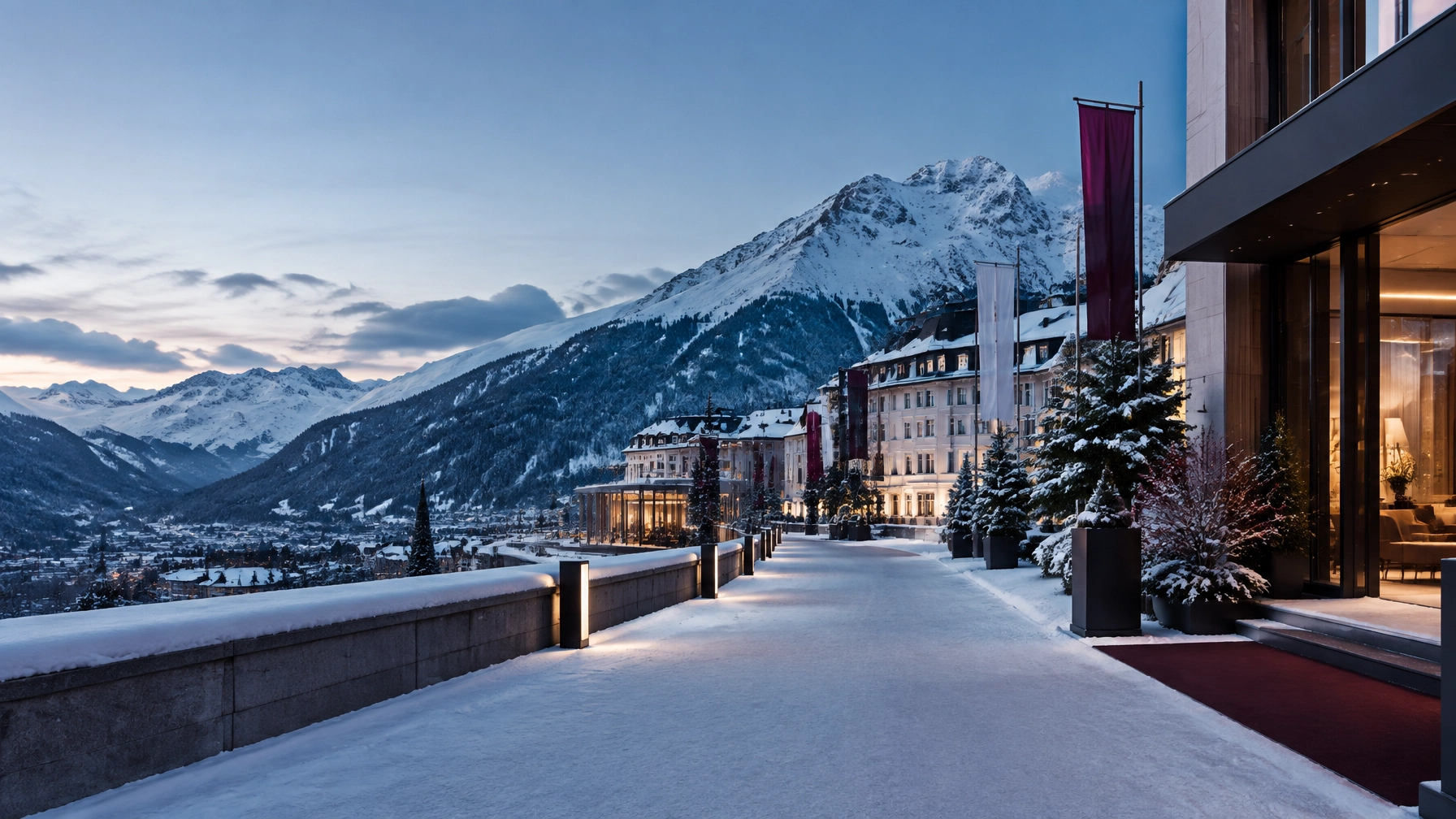
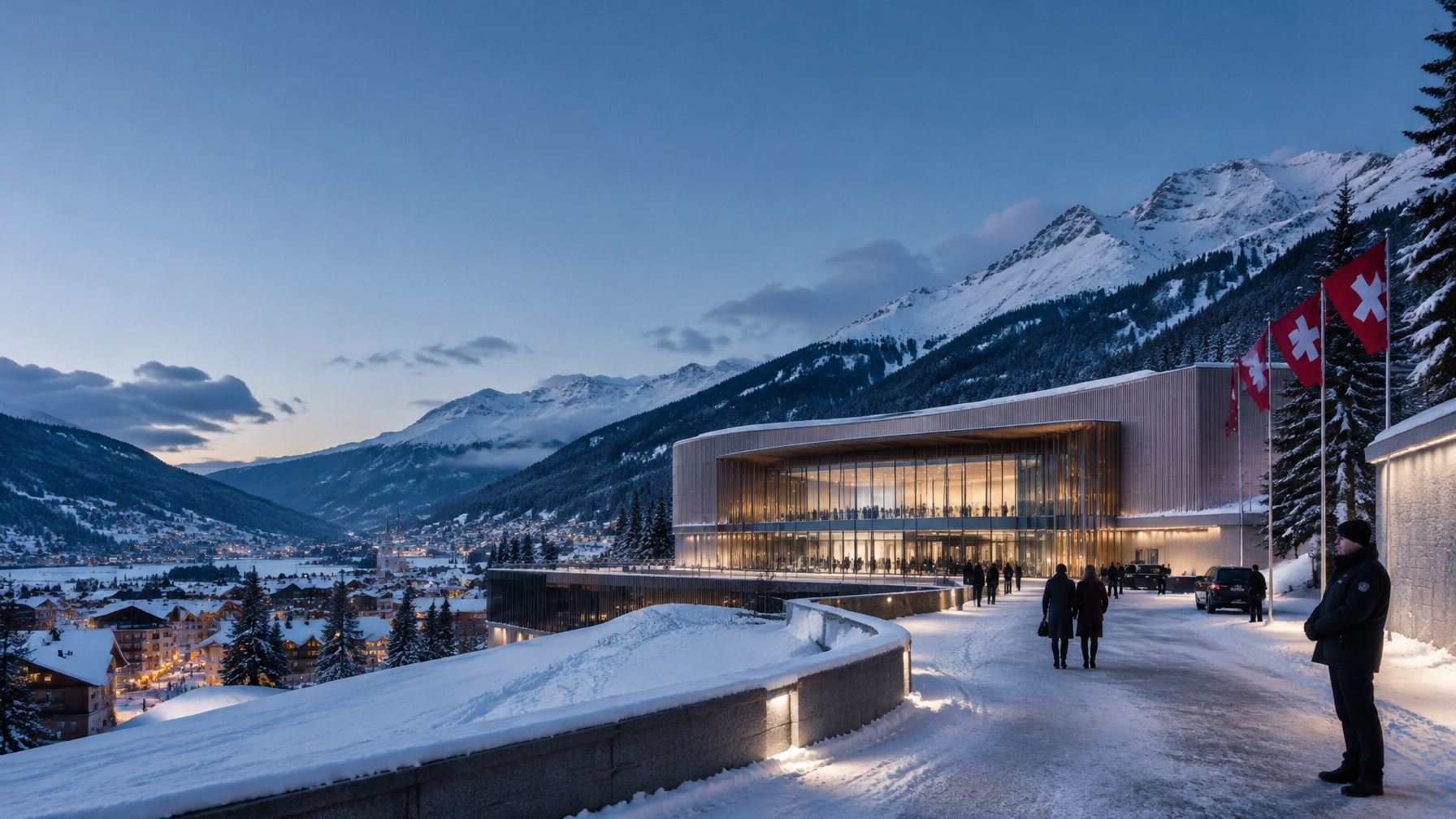
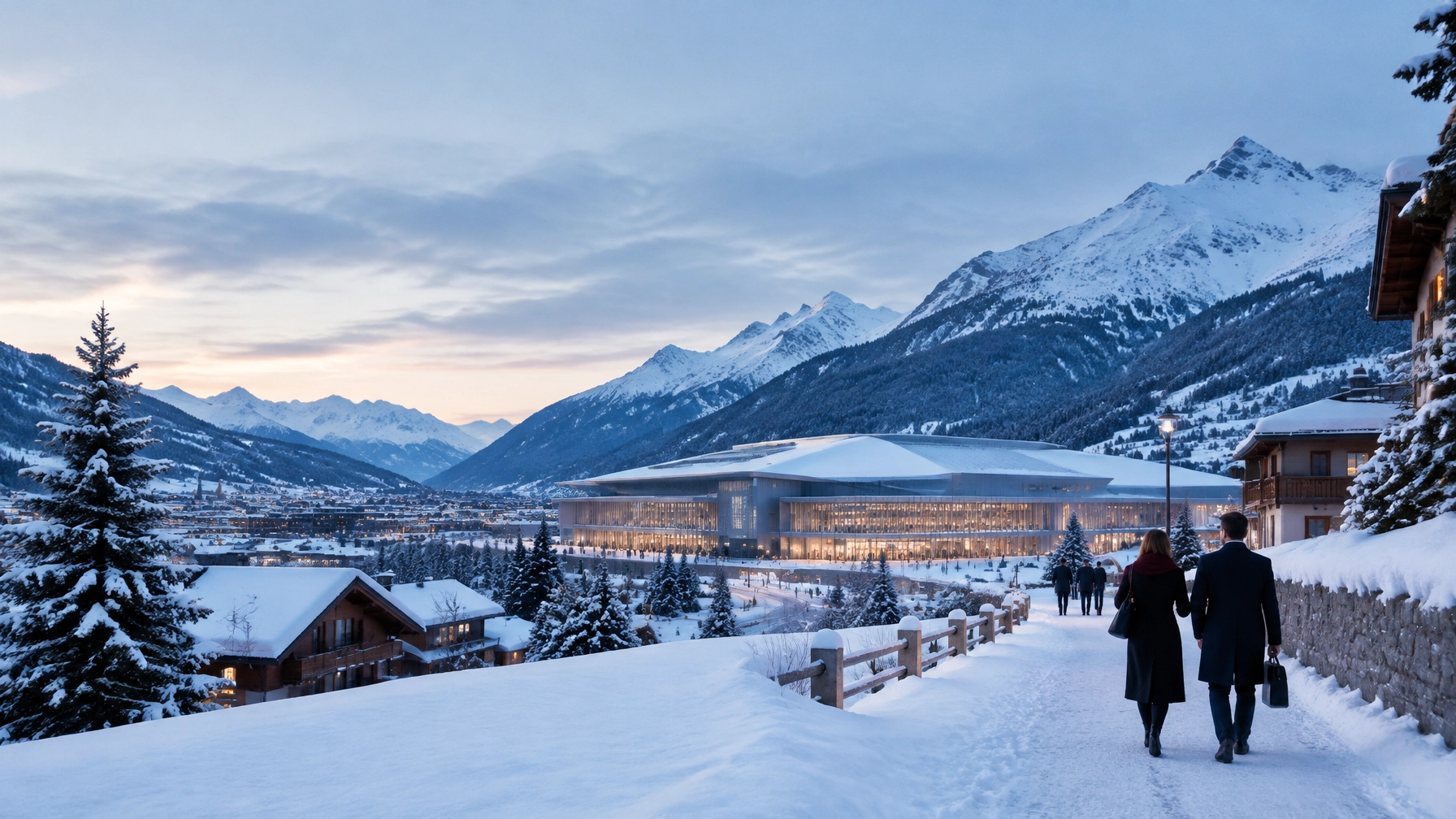
Davos 2027 houses will form the operating layer around the official World Economic Forum programme: corporate venues, national pavilions, investor lounges, private chalets and hosted meeting spaces.
The official WEF Annual Meeting is scheduled for 18–22 January 2027. The wider Davos ecosystem will begin earlier and continue through the week, with most activity concentrated around the Promenade, Davos Platz and the Congress Centre.
What are Davos houses?
A Davos house is a temporary or converted venue operated by a company, government, sector coalition, foundation or event organiser during WEF week.
Houses typically host:
- Executive panels and fireside discussions
- Investor breakfasts and family office meetings
- Country investment presentations
- Private dinners and receptions
- Client meetings and partner briefings
- Media interviews and broadcast sessions
- Networking events for founders, CEOs and policy professionals
They operate outside the official WEF programme. A WEF badge may provide access to the Congress Centre, but it does not automatically provide entry to corporate houses, national pavilions or private venues.
The relevant access mechanism is usually one of three categories: registration, invitation or host confirmation.
Davos 2027 houses at a glance
Venue type Primary purpose Typical access Best suited to
Corporate house Client engagement, sector programming and brand presence Registration, invitation or host confirmation CXOs, founders, advisors and enterprise executives
Thematic house Concentrated discussion around AI, climate, fintech, health or policy Registration or curated guest list Investors, specialists and sector operators
Country pavilion Investment promotion, diplomacy and national business outreach Often open during the day; receptions are curated Investors, companies, trade delegations and policy professionals
Private venue Confidential meetings, dinners and small roundtables Invitation-only or host-controlled Family offices, founders, CEOs and deal teams
Hotel suite or chalet Bilateral discussions and private programming Private booking or direct invitation Investors, advisors and senior executives
The distinction matters. A corporate house may have a public panel but restrict access to its lounge. A national pavilion may allow daytime walk-ins but require an invitation for an evening reception. A chalet may not publish a programme at all.
Corporate houses and thematic venues to watch
Corporate and thematic houses are designed around concentrated business objectives. Their programming often combines public visibility with private meetings.
Recurring or recently observed formats have included:
- Technology and artificial intelligence houses
- Consulting and professional services venues
- Financial services and private capital lounges
- Web3 and digital assets hubs
- Health, longevity and life sciences houses
- Climate, energy and transition venues
- Enterprise technology pavilions
- Media and broadcast studios
- Academic and policy forums
Recent Davos programmes have included venues such as AI House, Deloitte Haus, Web3 Hub, Brain House, HCLTech Pavilion and Palantir Pavilion. These references should be treated as indicators of venue categories and recurring patterns, not as a confirmed Davos 2027 houses list.
The Davos Promenade Matrix provides a useful reference for understanding how corporate and national venues are distributed and accessed. The final 2027 roster will depend on host announcements, municipal approvals and venue agreements.
What corporate houses are built to achieve
For companies, a house is rarely just a conference venue. It functions as a temporary operating base for:
- Targeted meetings with clients, investors and partners
- Narrative control around a strategic topic
- Pipeline development with prospects and intermediaries
- Stakeholder access across business, government and civil society
- Private programming that cannot be delivered in a large public forum
For attendees, the value is not necessarily the headline panel. The more useful opportunities may sit between sessions: a host introduction, an investor breakfast, a short meeting with a country delegation or a follow-up discussion in the lounge.

Country pavilions and national houses
Country pavilions operate differently from corporate houses. Their purpose is generally to promote investment, trade, policy priorities, tourism, national capabilities and institutional relationships.
Common formats include:
- Investment promotion sessions
- National business delegation meetings
- State or provincial presentations
- Bilateral discussions
- Sector-specific roundtables
- Cultural programming
- Hosted receptions
- Meetings with ministries, agencies and commercial attachés
Examples from recent Davos editions have included India Pavilion, Saudi House, USA House, Qatar Pavilion, Ukraine House and South Africa House. Their exact footprint and programme for 2027 must be confirmed by each host country.
Why country pavilions matter to investors
Country houses can provide a concentrated view of where governments are directing capital, reform attention and international partnerships.
For investors and corporate executives, useful signals include:
- Which sectors receive dedicated programming
- Which regions send senior decision-makers
- Whether investment opportunities are presented as projects or policy themes
- Which companies appear alongside government representatives
- Whether meetings are structured for capital, market entry or diplomacy
The India delegation Davos 2027 will be particularly relevant for investors tracking technology, manufacturing, infrastructure, financial services, digital public infrastructure and state-level investment opportunities. The India Pavilion has previously combined national-level visibility with state and enterprise participation.
Access to country pavilions
Daytime access is often more open than access to corporate houses. Some country venues permit walk-ins for exhibitions, public sessions or information desks. Evening receptions, ministerial meetings and investor roundtables are usually controlled through invitations or pre-registration.
The practical approach is to contact:
- The relevant embassy or consulate
- National investment promotion agencies
- Commercial attachés
- Trade and industry associations
- State or provincial delegations
- Existing business contacts within the delegation
Specificity matters. A clear investment thesis, market objective or policy interest is more useful than a general request to “attend Davos.”
Private venues: chalets, hotels and discreet meeting spaces
Private venues form the confidential layer of Davos. They include:
- Private chalets
- Hotel suites
- Restaurant dining rooms
- Boardrooms
- Serviced apartments
- Hosted residences
- Meeting rooms within hotels and conference facilities
These venues are used for conversations that require privacy, continuity and schedule control. A family office may use a chalet for a sequence of manager meetings. A founder may host a small investor dinner. A multinational may arrange bilateral meetings away from the main Promenade traffic.
Private venues are especially relevant to:
- Family office investment meetings
- Venture capital and private equity discussions
- M&A conversations
- Sovereign and institutional investor briefings
- Founder–investor meetings
- CEO and board-level conversations
- Sensitive policy or regulatory discussions
The Davos 2027 accommodation guide is relevant for teams assessing hotels, apartments and private properties. Accommodation should be evaluated not only as lodging but also as a potential meeting base.

Where the main houses are located
The Davos Promenade remains the principal corridor for corporate houses, national pavilions and partner activations. Davos Platz provides access to the Congress Centre, hotels, restaurants and many of the venues used for side programming.
The working geography can be divided into three areas:
Promenade
Best for:
- Corporate houses
- National pavilions
- Walk-in daytime programming
- Short meetings between sessions
- Visibility across the wider Davos 2027 events calendar
Congress Centre and surrounding hotels
Best for:
- Official WEF activity
- Secure meetings
- Delegation offices
- Institutional programming
- Hotel suite discussions
Davos Dorf and hillside properties
Best for:
- Private dinners
- Chalets and apartments
- Family office meetings
- Off-site strategy sessions
- Smaller gatherings requiring privacy
Walking is often more reliable than driving between central venues. Security checks, traffic controls, snow and motorcades can make short journeys unpredictable during the busiest hours.
How to plan around Davos houses in 2027
A practical planning process should begin before the final house list is published.
September to October 2026
- Define the purpose of attending
- Identify target sectors and counterparties
- Map priority corporate houses and country pavilions
- Confirm accommodation requirements
- Begin outreach to hosts and delegations
November to December 2026
- Monitor confirmed Davos 2027 events
- Submit registrations
- Request invitations to receptions and dinners
- Build a meeting schedule by geography
- Reserve private rooms or meeting venues
- Track changes to the official programme
January 2027
- Confirm every meeting directly
- Check access instructions and guest-list status
- Allow additional travel time
- Keep space for unplanned introductions
- Use daytime pavilions for open networking
- Reserve evenings for the highest-value dinners
The Parallel Davos guide and its side-event listings illustrate how the broader programme operates outside the Congress Centre.
Access without a WEF badge
“How to attend Davos without a WEF badge” is one of the most common planning questions. The answer is straightforward: access to the broader Davos ecosystem is controlled by individual hosts, not by the Forum alone.
Without a WEF badge, attendees may still access:
- Registered corporate house sessions
- National pavilion programming
- Public panels
- Partner receptions
- Private meetings
- Investor breakfasts
- Davos networking events
- Restaurants, hotels and hosted venues
A badge does not replace an invitation, and an invitation does not necessarily provide access to the official WEF programme.
For Davos event registration, check the host’s own website or registration form. Do not assume that a listing on a general event calendar constitutes confirmation.
What to monitor for Davos 2027
The most useful monitoring categories are:
- Davos 2027 Events Calendar: confirmed sessions, houses and receptions
- WEF 2027 dates: official Annual Meeting timing and programme releases
- World Economic Forum 2027 events: official sessions and public announcements
- Davos side events 2027: programmes operating outside the Forum
- Davos houses 2027: corporate, thematic and national venues
- Who is attending Davos 2027: confirmed executives, investors and officials
- Davos attendee list 2027: published or host-confirmed participants
- Davos investors 2027: family offices, funds and institutional capital
- Davos accommodation and venues: meeting bases and private event locations
- Davos deal opportunities: investment, partnership and market-entry discussions
These categories should be treated as a live intelligence system rather than a static directory. Schedules change, invitations are withdrawn and private programming may never be publicly listed.
Frequently asked questions
Do I need a WEF badge to attend a Davos house?
No. Corporate houses, country pavilions and private venues are generally operated independently of the official Forum access system. Entry depends on registration, invitation, host confirmation or walk-in policy.
Which Davos 2027 houses are likely to be most relevant to investors?
National pavilions, investor-focused corporate houses, private capital venues and sector houses covering AI, climate, energy, healthcare, fintech and digital assets are likely to attract the strongest investor interest. The confirmed 2027 programme should be checked directly with each host.
Are Davos country pavilions open to the public?
Some allow daytime walk-ins for selected sessions or exhibitions. Receptions, ministerial meetings and private investor events generally require registration or invitation.
How early should founders and family offices plan?
Accommodation and private venues should be addressed several months in advance. Outreach to corporate houses, country delegations and event hosts should begin by autumn 2026, with meeting schedules refined as the 2027 programme is released.
Conclusion
Davos 2027 houses will operate as a distributed network of corporate venues, country pavilions and private meeting spaces around the official Forum. The strongest planning model separates public programming from controlled access, maps venues by geography and treats invitations as a separate workstream from accreditation.
The Davos Collective provides independent intelligence on this ecosystem and is not affiliated with the World Economic Forum.