Davos 2027 Side Events vs. the Official WEF Programme: Which One Actually Moves Deals?
By The Davos Collective · 5 October 2026 · 13 min read
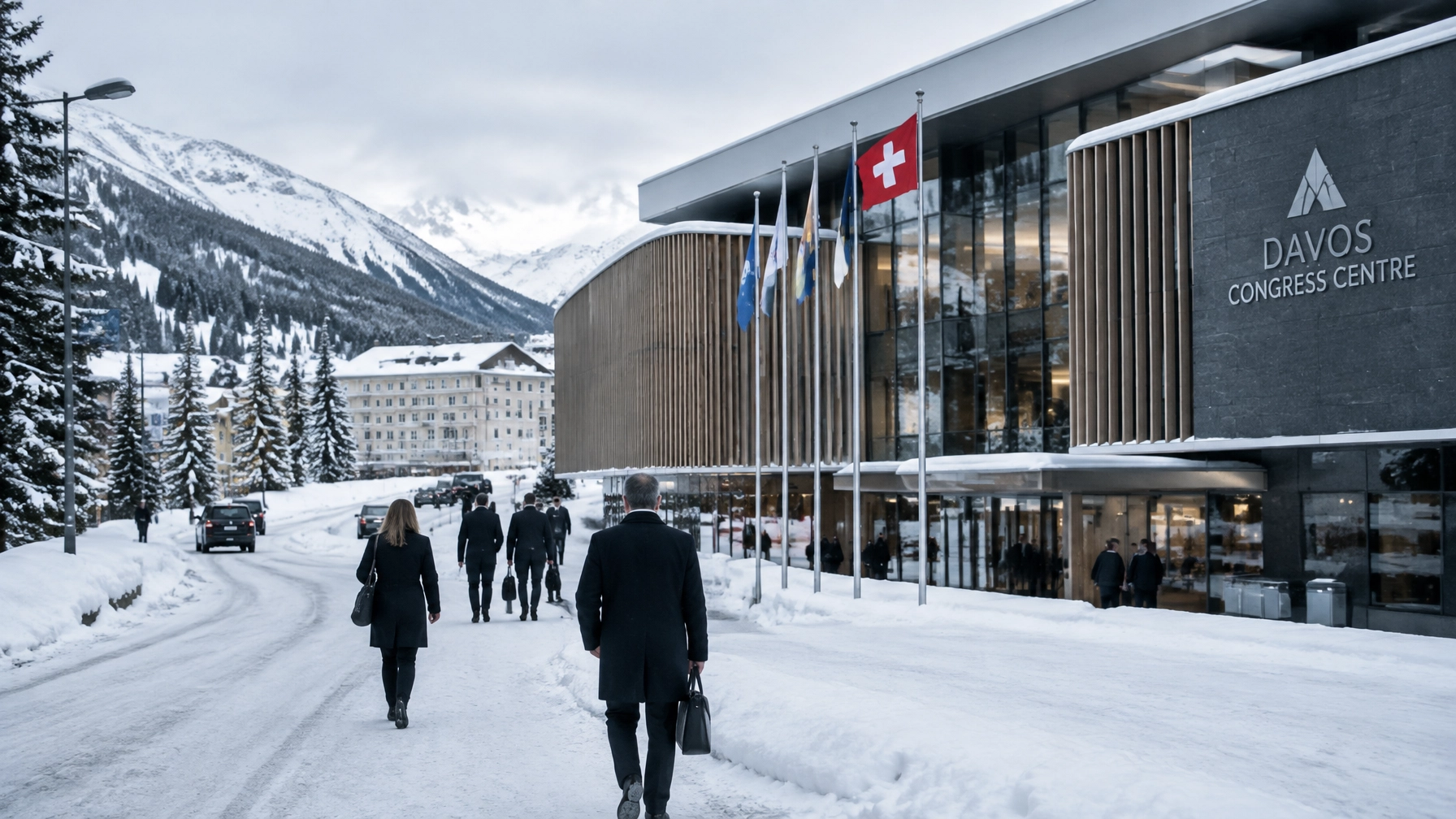
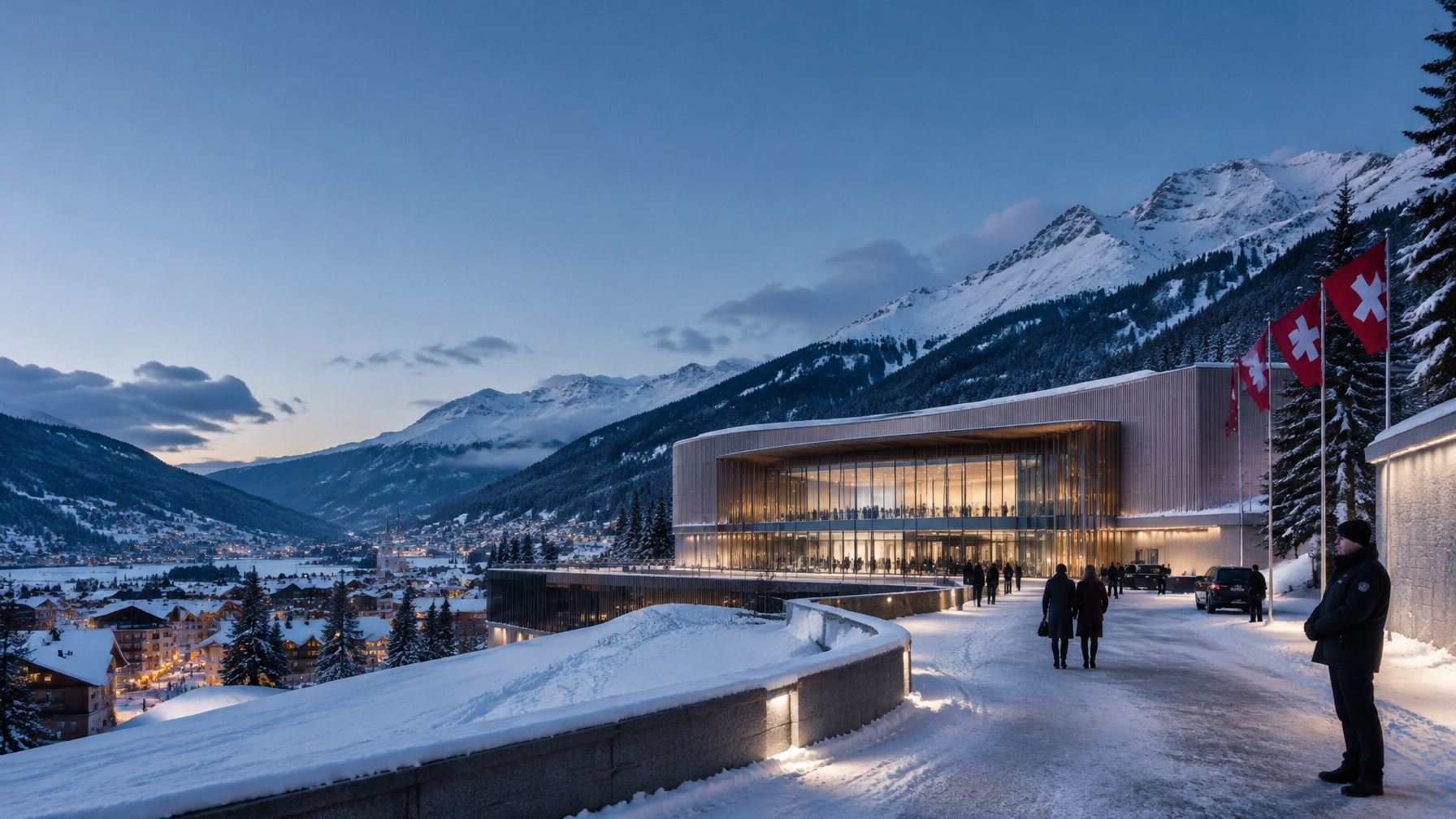
The World Economic Forum Annual Meeting 2027 runs from 18-22 January 2027 at the Davos Congress Centre in Davos-Klosters, Switzerland. Those WEF 2027 dates anchor the week, but they do not describe the whole market. The official programme, sanctioned side programming, corporate houses, country pavilions, hotel meeting floors, investor lounges, private dinners and the Promenade each operate by different access rules and different incentives. For anyone tracking Davos 2027 events with a practical objective, the central distinction is simple: badges govern the Congress Centre, while invitations, guest lists and institutional relationships govern almost everything else.
The real structure of Davos week
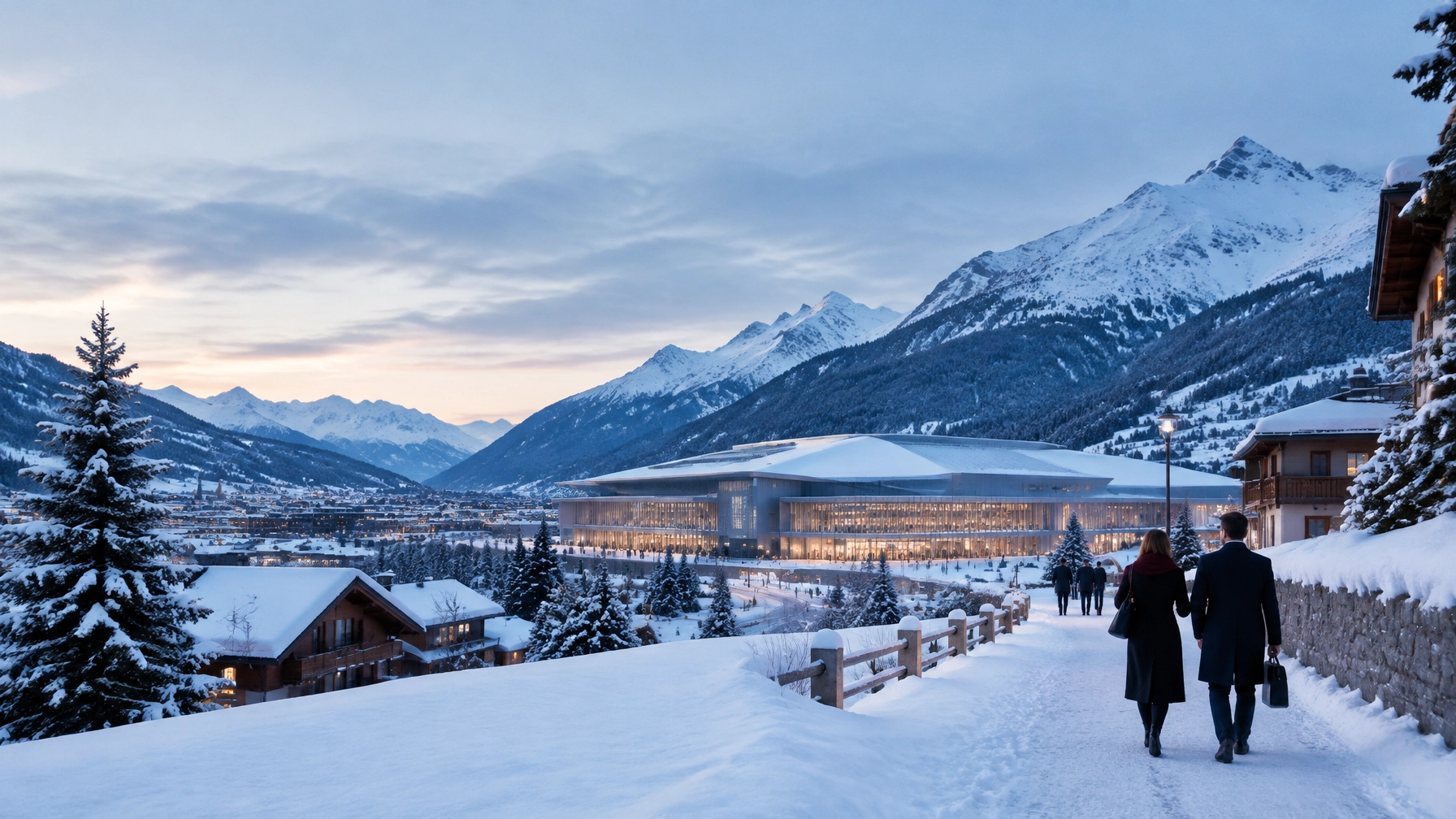
Davos is often described as a single event. In practice, it is a layered operating environment built around one official institution and a much larger field of adjacent activity. The official World Economic Forum 2027 events provide the calendar spine and the concentration of senior decision-makers. Around that spine sits a dense ecosystem of Davos side events 2027, Davos houses 2027, bilateral meetings, investor programmes, delegation activity and private hospitality.
That distinction matters because different parts of the week do different jobs. The Congress Centre is strongest at agenda-setting, formal convening and visibility inside an institutional framework. Side programming is stronger at thematic access and controlled networking. Corporate houses and hotel-based programmes are where many practical commercial conversations mature. Private dinners and tightly curated lounges often produce the highest-quality interaction, but only when the host has assembled the right room.
For executives, investors, policy professionals and advisers, the wrong assumption is that access to Davos is mainly about one badge. The better assumption is that Davos networking events are fragmented by host, format, security and intent. The useful question is not simply how to get in. It is where a specific type of meeting is most likely to happen, under what access conditions, and whether the slot is worth the time cost.
The official Annual Meeting: what the Congress Centre is actually for
What it is
The official Annual Meeting is the institutional centre of the week. It is where plenaries, selected closed sessions, leadership discussions, media moments and high-level policy conversations are concentrated. It is also the part of the Davos ecosystem with the clearest structure, the strongest security perimeter and the most formal participation rules.
The Congress Centre in Davos-Klosters is where the official schedule is staged. That includes the public-facing sessions that shape the global narrative and the private, invitation-led meetings that matter to governments, multinationals, major investors and international organisations.
Who gets in
Access is governed primarily by badge status. Without the relevant badge, the Congress Centre is not an open networking venue. This is the most important operational fact behind many searches for how to attend Davos without a WEF badge: the answer is that one does not casually enter the official venue. Access to the official programme depends on accreditation, participant category, host relationships and session-level permissions.
Whether it moves deals
Yes, but indirectly and selectively. The official programme is not best understood as a marketplace in the conventional sense. It creates legitimacy, concentration and sequencing power. It helps participants align around issues, identify who is present and legitimise follow-up conversations. Some mandates and partnerships begin there, but many of the commercially relevant next steps move elsewhere: a house on the Promenade, a hotel suite, a delegation room, a private lunch or a dinner with six carefully chosen participants.
Comparison table: where each layer of Davos week actually works
Format Purpose Access route Who hosts Best use Typical time of day
Official WEF programme Agenda-setting, formal convening, policy and leadership dialogue Badge, accreditation, session permissions World Economic Forum and official partners within programme structure High-level visibility, institutional signalling, identifying priorities and principals Morning to late afternoon, with some evening functions
Sanctioned side events Thematic discussion adjacent to official agenda Invitation, registration approval, partner lists Media groups, consultancies, NGOs, corporates, policy platforms Meeting domain experts, sector peers, issue-specific stakeholders Breakfast through evening receptions
Corporate houses and country pavilions Relationship-building, hosting, bilateral meetings, controlled hospitality Invitation, guest list, host relationship, sometimes pre-registration Corporates, governments, trade agencies, national platforms Qualified networking, reputation management, targeted commercial dialogue All day, often strongest mid-morning to early evening
Investor and family-office lounges Capital access, pipeline review, thesis testing Referral, invitation, host screening, limited guest lists Banks, investors, advisory firms, private networks Efficient conversations with Davos investors 2027 and allocators Breakfast meetings, midday sessions, late afternoon
Hotel-based meeting programmes Private negotiations, overflow scheduling, focused bilateral discussions Direct invitation, assistant coordination, host relationship Corporates, sovereign entities, advisers, investors Deal work, sensitive discussions, follow-up after public sessions Throughout the day; often compressed around lunch and late afternoon
Private dinners Trust-building, high-signal curation, candid exchange Invitation only, very limited seating Senior executives, investors, family offices, diplomatic or corporate hosts Advancing serious relationships and testing alignment Evening
The Promenade Serendipity, visibility, last-minute encounters, informal movement between venues Open public street, but venue access remains restricted No single host; activity driven by nearby venues Chance encounters, orientation, tactical introductions All day, especially around venue changeovers
Layer by layer: what each part of the ecosystem is for
Sanctioned side events
Davos side events 2027 are not one category in functional terms. Some are substantive working sessions tied closely to sector issues such as energy, AI, climate finance, health systems or geopolitical risk. Others are branding exercises with networking attached. The strongest side events sit in the middle: credible speakers, a clear host objective and a guest list that mixes decision-makers with implementers.
Who gets in depends on host logic. Some events approve registrants individually. Others operate from hard guest lists. A few remain relatively accessible if one is early and relevant. Many appear open online but are effectively closed by capacity or host discretion.
Do they move deals? Sometimes, especially at the qualification stage. Side events are good for identifying live mandates, pressure-testing propositions and converting cold names into warm follow-ups. They are less reliable for closing anything material in the room itself.
Corporate houses and country pavilions

Davos houses 2027 and national pavilions are among the most misunderstood parts of the week. They are not merely hospitality venues. They are temporary operating bases. Hosts use them to signal relevance, convene stakeholders, brief partners, manage media, hold bilateral meetings and create a controlled environment around their agenda.
Access usually depends on one of four routes:
- direct invitation from the host
- relationship with the host institution or its senior staff
- inclusion on a partner or delegation guest list
- approved registration for specific sessions, where capacity allows
Do they move deals? Frequently, but not always visibly. Houses and pavilions often create the bridge between broad networking and specific opportunity. They are effective because they compress credibility, context and convenience in one place. A conversation there can move from introduction to follow-up planning quickly, especially when legal, policy, investor and operating stakeholders are all circulating in the same venue.
Investor and family-office lounges
These venues matter disproportionately to anyone pursuing Davos deal opportunities. The public mythology of Davos tends to focus on plenaries and prominent speakers. In practice, capital conversations often happen in rooms with limited branding, small guest lists and strict screening.
Who gets in is usually a function of referral quality. Hosts want qualified deal flow, not foot traffic. That means a founder, adviser or executive without an established connector may find these rooms difficult to access, even with a strong profile on paper.
Do they move deals? They can, especially for:
- investor mapping
- mandate discovery
- co-investor introductions
- sovereign and family-office relationship development
- testing whether a thesis belongs in formal diligence later
They are less effective for broad awareness-building. Precision matters more than volume.
Hotel-based meeting programmes
Much of Davos operates through hotel lobbies, suites, meeting floors and private salons. These are not always branded as public-facing events, but they often matter more than visible stage programming. Executives use them because they reduce noise and allow real scheduling control.
Who gets in is straightforward: invited participants and approved contacts. Access can be as simple as a name on a list and as restrictive as being escorted from lobby to room.
Do they move deals? More often than many stage events do. Hotel-based programmes are where teams compare notes after public sessions, revise proposals, line up diligence calls and decide whether to escalate a discussion. If one part of Davos is built for signalling, this part is built for working.
Private dinners

Private dinners are often overvalued by people who focus on prestige and undervalued by people who focus only on formal programming. A dinner is useful only when the table is curated with discipline. Ten strong participants with aligned relevance can produce more movement than a crowded reception with a hundred names.
Who gets in is entirely invitation-led. The best tables are usually assembled through longstanding relationships, trusted intermediaries or very clear strategic relevance.
Do they move deals? Yes, when the host has done the work. Dinners are effective for:
- trust formation
- clarifying seriousness
- introducing counterparties who would not otherwise meet
- moving sensitive topics outside a public setting
- identifying whether a follow-up should happen the next morning
What they are not good for is random prospecting.
The Promenade
The Promenade is the visible spine of movement through Davos. It matters because it connects venues, not because it replaces them. People overestimate its openness and underestimate its tactical value.
Anyone can move along the street. Not everyone can enter the rooms along it. That distinction is critical. The Promenade is useful for:
- chance encounters between scheduled meetings
- reading where activity is clustering
- making fast in-person introductions already prepared by message
- recovering time when weather or security disrupts a plan
It does not substitute for access. It amplifies it.
Does it actually move deals?
The short answer is yes, but unevenly. Different layers of the week move different parts of the deal cycle.
Strongest for visibility and agenda context
- official sessions
- flagship side events
- major country pavilion panels
Strongest for relationship qualification
- corporate houses
- investor lounges
- curated receptions
- small-format thematic roundtables
Strongest for actual commercial progression
- hotel meeting programmes
- bilateral meetings in controlled venues
- private lunches and dinners
- follow-up sessions with a narrow participant set
The phrase Davos deal opportunities is often used too loosely. Davos does not create value merely by concentration. It creates value when concentration is converted into sequence: first contact, qualification, follow-up, decision path and ownership after the week ends.
How to sequence a Davos week without wasting it
The most effective participants do not try to maximise event count. They protect meeting quality.
Protect two or three priority meetings a day
A practical rule is to anchor each day around two or three meetings that genuinely matter. Everything else should support those anchors. If the day is overloaded with panels, receptions and transit, the week becomes performative rather than useful.
A defensible daily structure often looks like this:
- one priority meeting in the morning
- one priority meeting around lunch or early afternoon
- one high-value dinner or late-afternoon bilateral
- optional secondary events only if they do not endanger the anchor meetings
Allow for snow, security and venue friction
Davos scheduling fails when people assume urban transit logic. In reality, snow, security screening, pedestrian congestion and venue entry protocols create consistent delays. A nominal ten-minute move can easily become thirty. Crossing from one end of the ecosystem to another without buffer is a planning error.
Practical allowance:
- build 20-30 minute buffers between meaningful commitments
- avoid back-to-back meetings in distant venues
- confirm the exact entrance point, not just the venue name
- expect security checks to vary by host and profile of attendees
Understand the difference between being seen and being useful
Being seen means appearing in the right rooms, being photographed at the right house, or being present at the right panel. Being useful means producing outcomes: a confirmed follow-up, a warm introduction, a diligence request, a government contact, an investor continuation, a policy clarification.
Both have value. They are not the same. Participants often sacrifice usefulness for visibility. The best operators treat visibility as a by-product of purposeful movement, not the objective.
How to judge whether an invitation is worth the slot
Every invitation competes with time, weather, movement and cognitive attention. The correct test is not status alone.
A slot is usually worth keeping when:
- the host can convene people you are unlikely to reach elsewhere
- the room contains decision-makers rather than only intermediaries
- the format allows actual conversation, not just audience attendance
- the invitation fits one of your pre-defined priority tracks
- the venue location supports the rest of the day
A slot is often low-value when:
- the attendee mix is broad but weakly curated
- the event duplicates conversations available elsewhere
- the panel is public-facing but offers no access beyond the stage
- the travel time exceeds the likely value of the room
- the invitation arrived without any indication of guest quality or format discipline
A simple test helps: if the event disappeared from your calendar, would it materially reduce your access, intelligence or relationship pipeline? If not, it may be a visibility asset rather than a working asset.
Practical operating checklist for Davos 2027
Before arrival
- identify your three primary objectives for the week
- map target counterparties by venue type, not just by name
- confirm who controls each invitation: host team, partner, assistant or security desk
- build a schedule around the WEF 2027 dates, but leave buffer for changes
- separate must-attend meetings from optional Davos networking events
During the week
- re-confirm priority meetings each morning
- carry a venue-sequenced schedule, not just a time-sequenced one
- use side events for discovery and houses for follow-through
- avoid overcommitting to breakfasts if dinners are strategically stronger
- track who promised what before the day ends
After the week
- send follow-up within 48 hours
- rank contacts by immediacy, not prominence
- note which hosts actually assembled useful rooms
- convert informal discussion into a defined next step
- separate genuine opportunity from ambient Davos theatre
FAQ
1. What are the WEF 2027 dates and where is the official meeting held?
The World Economic Forum Annual Meeting 2027 runs from 18-22 January 2027 at the Davos Congress Centre in Davos-Klosters, Switzerland. That official programme forms the institutional centre of the week.
2. Can you attend Davos without a WEF badge?
Yes, parts of Davos can be accessed without an official badge, but not the Congress Centre itself. Many Davos 2027 events outside the official venue operate through invitations, guest lists, partner networks and host relationships rather than WEF accreditation.
3. Are Davos side events 2027 where deals actually happen?
Some are. Side events are usually better for meeting formation, qualification and thematic access than for final decisions. The strongest commercial movement often happens in follow-up meetings at houses, hotels, investor lounges and private dinners.
4. Where are the best rooms to meet Davos investors 2027?
Usually not in the most public settings. Investor and family-office lounges, hotel-based bilateral programmes, curated small-group sessions and tightly hosted dinners tend to produce better investor conversations than broad, open receptions.
Conclusion
The official programme and the surrounding ecosystem serve different functions. The Congress Centre concentrates agenda, status and institutional access; the wider field of side events, houses, lounges, hotels and dinners distributes relationship-building and practical execution across the week. For anyone assessing Davos 2027 events seriously, the core operating distinction remains clear: badges govern the official venue, while invitations and relationships govern most of the rest. The Davos Collective covers this ecosystem as an independent intelligence platform and is not affiliated with the World Economic Forum.