Davos Accommodation and Venues: The Insider's Guide
By The Davos Collective · 14 September 2026 · 8 min read
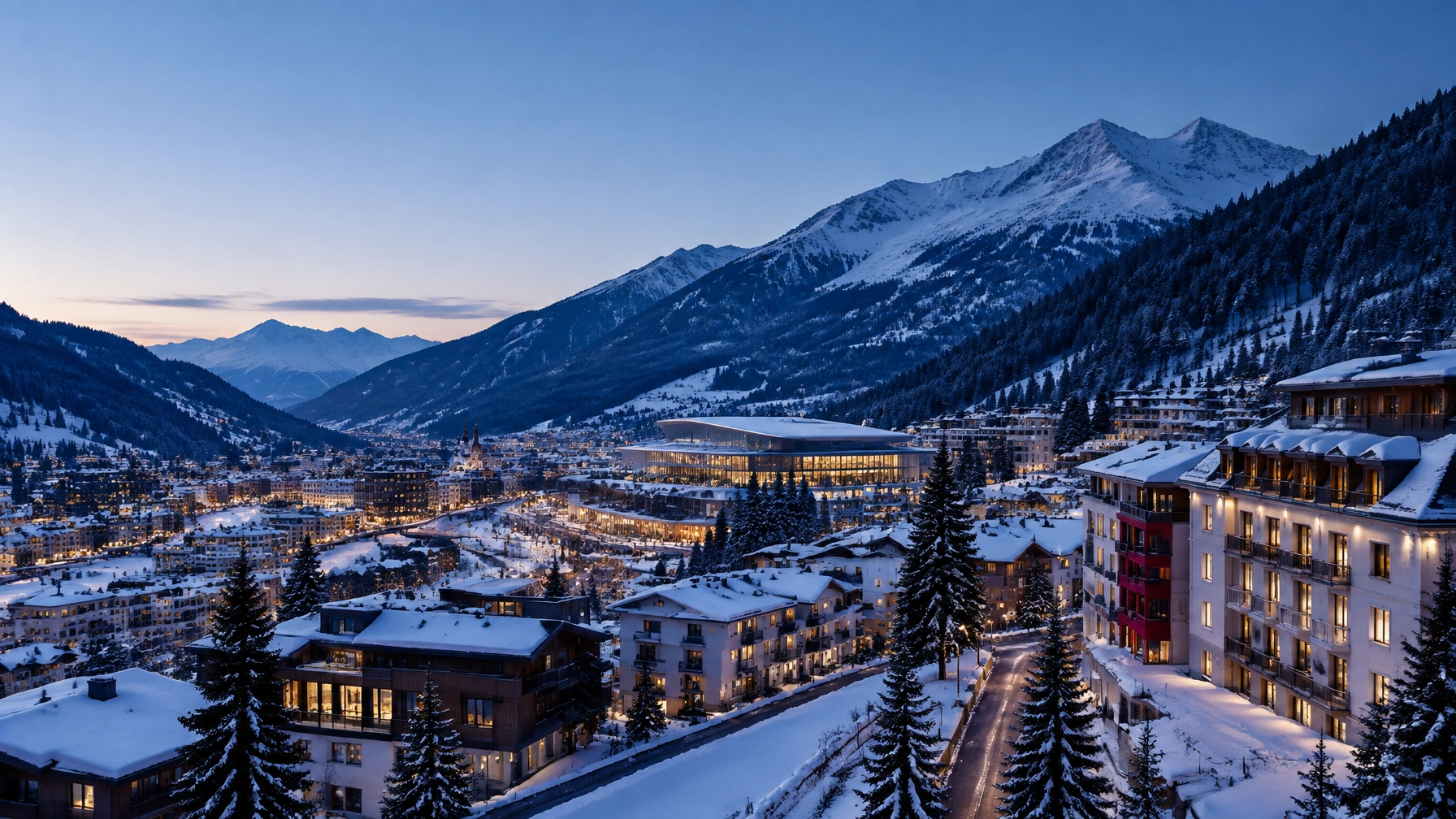
Davos is not a compact conference district. It is a linear alpine town where accommodation, meeting locations, transport and access rules directly shape the quality of a delegation’s week.
For executives, investors and policy professionals planning for 2027, the central question is not simply where to sleep. It is where to establish a base that supports the right meetings, travel patterns and level of access.
The 2027 context
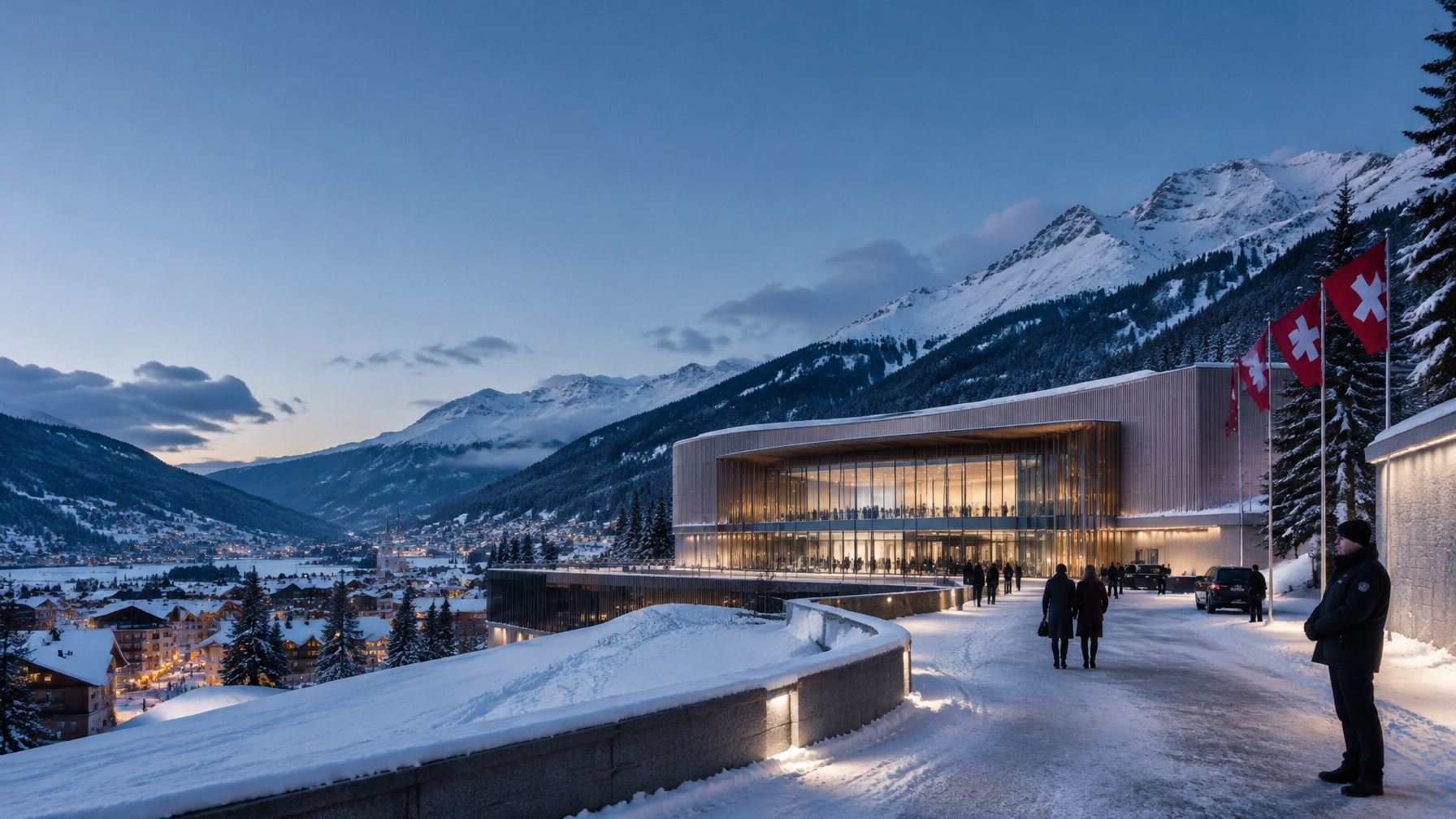
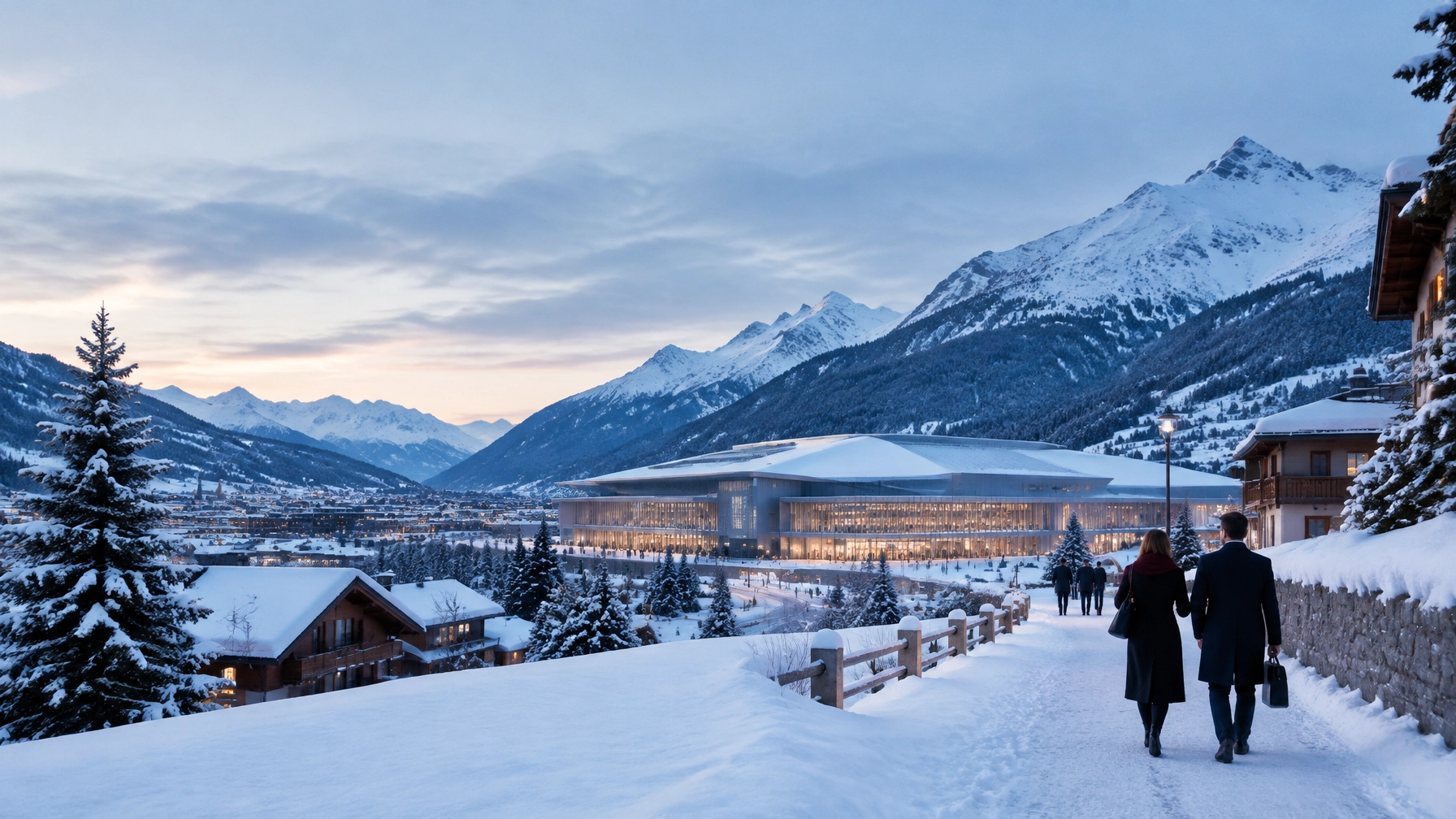
The Davos Congress event calendar currently lists the World Economic Forum Annual Meeting 2027 for 18–22 January 2027, at the Kongresszentrum Davos in Davos Platz.
The World Economic Forum’s own website had not yet published an official 2027 Annual Meeting page at the time of writing. Dates, access arrangements and security measures should therefore be checked against the Forum’s official meetings page and local authorities before final commitments.
The distinction matters. The Congress Centre is the principal official venue, but the wider Davos ecosystem extends across hotels, restaurants, chalets, corporate houses, private residences and temporary event spaces.

Davos Platz or Davos Dorf?
Davos is divided broadly into two connected centres: Davos Platz and Davos Dorf.
Davos Platz
Davos Platz is the principal business base during the Annual Meeting. The Congress Centre, major hotels, restaurants, shops and much of the Promenade activity are concentrated here.
For delegates with dense schedules, Davos Platz provides the strongest operational advantage:
- Shorter walking distances to the Congress Centre
- Greater proximity to hotels hosting private meetings
- Easier access to restaurants and evening events
- Less dependence on scheduled transfers
- Better visibility of the informal networking environment
The trade-off is intensity. Platz is the most congested part of Davos during summit week, with higher demand, stricter security controls and limited flexibility for last-minute arrangements.
Davos Dorf
Davos Dorf sits approximately three kilometres north of Davos Platz. It is generally quieter and more residential, with its own railway station, hotels and local services.
Dorf can work well for:
- Delegations seeking a calmer base
- Teams using serviced apartments
- Participants with a smaller number of centrally located meetings
- Organisations balancing proximity against accommodation cost
- Groups that need more internal space than a standard hotel room provides
The distance is manageable in ordinary conditions. During the Annual Meeting, however, security checks, traffic and crowded transport can turn a short journey into a scheduling issue. A meeting grid built around Dorf accommodation should include practical buffers rather than relying on normal travel times.

Choosing the right accommodation format
The best accommodation model depends on the delegation’s purpose, not simply its budget.
Hotels
Hotels remain the most efficient option for individuals and small teams requiring reception services, housekeeping, restaurants and established meeting facilities.
During Annual Meeting week, hotel inventory is commonly constrained by corporate allocations and extended booking arrangements. Public booking platforms may show limited availability, while individual properties can impose minimum stays or specific arrival and departure conditions.
When assessing a hotel, examine more than the room:
- Distance to the Congress Centre
- Availability of private meeting rooms
- Breakfast and dining capacity
- Guest registration requirements
- Transport arrangements
- Cancellation terms
- Ability to host confidential conversations
- Whether visitors require additional access credentials
A hotel near the Congress Centre is not automatically the best choice. The right property is the one that aligns with the delegation’s daily movement and meeting profile.
Serviced apartments
Serviced apartments provide more control than conventional hotel rooms. They can accommodate small teams, support internal briefings and reduce dependence on hotel restaurants for every meeting.
They are particularly useful for organisations that need:
- Separate sleeping and working areas
- A private base for a small delegation
- Flexible meal arrangements
- Evening discussions away from public venues
- A less formal environment for internal coordination
The compromise is service consistency. Housekeeping, reception, catering, access control and transport must be confirmed in advance rather than assumed.
Chalets and private houses
Chalets are often selected by senior delegations that require privacy, space and control over the meeting environment. A suitable property can combine accommodation, executive dining and closed-door meetings under one roof.
This format is valuable when the programme includes:
- Board-level discussions
- Investor meetings
- Private dinners
- Media preparation
- Policy roundtables
- Multi-day strategy sessions
A chalet outside the central corridor can create transport complexity. A central chalet may offer a stronger meeting advantage but will command greater demand and require earlier planning.

Venue geography and networking
Davos networking is shaped by proximity. Meetings may be scheduled across the Congress Centre, hotel lounges, private houses, restaurants and temporary venues along the Promenade.
A location decision therefore affects more than commuting. It influences:
- Which meetings can be accepted between formal sessions
- Whether a delegation can host several events in one day
- How easily participants can return to a private base
- The likelihood of informal encounters
- The time available for security and registration
- The quality of evening coordination
For a session-heavy programme, proximity to the Congress Centre is decisive. For a private-event programme, a flexible hotel, apartment or chalet may offer greater value than a room within the official venue corridor.
The most efficient delegations usually cluster activity. Accommodation, internal meetings, hosted dinners and external appointments are arranged within a defined radius wherever possible.
Official venues, parallel venues and access
Accommodation does not provide access to official World Economic Forum sessions. A hotel reservation, chalet booking or private invitation is separate from the credentials required for the official programme.
The following distinctions should remain clear:
- WEF credentials: Govern access to the official Annual Meeting programme and controlled areas.
- Private invitations: Govern access to corporate meetings, dinners, houses and side events.
- Hotel access controls: May apply to certain properties within or near secure areas.
- Building permits: Apply to temporary structures and certain venue conversions.
- Ordinary hospitality use: Hotel rooms, standard meeting rooms and restaurants may follow a different regulatory path.
The municipality of Davos has introduced a cap for temporary projects associated with the 2027 meeting. Current planning material indicates a maximum of 125 temporary structures and venue conversions, subject to local rules and deadlines. A company considering a branded house, restaurant conversion or pop-up venue should verify eligibility and permit requirements directly with the Municipality of Davos.
A standard hotel meeting room or private dinner may be operationally simpler than a temporary venue. It also reduces exposure to construction deadlines, permitting uncertainty and additional logistical requirements.
Transport and arrival planning
The primary international gateway is Zurich Airport. The Davos Congress Centre’s arrival information states that Davos Klosters can be reached from Zurich in approximately two hours, depending on the route and conditions.
Typical options include:
- Rail via Zurich, Landquart and Davos
- Pre-arranged road transfer
- Private vehicle with winter equipment
- Combination of rail and local transport
Road travel provides flexibility but is vulnerable to snow, congestion and summit-week controls. Rail offers greater predictability, although luggage, transfers and fixed timetables need to be integrated into the schedule.
Within Davos, walking is often the most reliable option for central meetings. Local rail and bus services connect Platz and Dorf, but schedules should not be treated as the only contingency. Each delegation should maintain a daily movement plan with:
- Meeting addresses
- Walking times
- Security or registration requirements
- Transport contacts
- Weather contingencies
- Departure buffers
- A clear fallback location
A practical booking framework for executives
A disciplined accommodation process should begin with the programme rather than the property.
1. Define the access profile
Separate official WEF participation from parallel Davos activity. The credential pathway determines which venues are relevant and how much time should be allocated to controlled access.
2. Map the meeting geography
Plot the Congress Centre, principal hotels, private event venues and planned dinners. A map often reveals that a cheaper room outside central Davos creates a significant daily time cost.
3. Select the accommodation model
Choose between hotel, apartment, chalet or mixed accommodation according to privacy, delegation size, meeting requirements and service expectations.
4. Confirm operational terms
Ask for written confirmation of minimum stays, visitor policies, cancellation conditions, catering, housekeeping, meeting-room use, transport and any badge or registration requirements.
5. Build a contingency plan
Alternative accommodation in Davos Dorf, Klosters or Chur may be necessary when central inventory is unavailable. The lower room cost must be weighed against daily travel and reduced scheduling flexibility.
Independent intelligence for Davos planning
The Davos ecosystem includes official institutions, private companies, investors, governments, media organisations and civil-society groups. Its public narrative does not always capture how access, venue choice and informal networks operate in practice.
The Davos Collective provides independent intelligence on the networks, conversations and decision-makers shaping this environment. It is not affiliated with the World Economic Forum, allowing its analysis to remain independent of the Forum’s institutional interests.
For 2027, effective planning will depend on treating accommodation and venues as strategic infrastructure rather than hospitality detail. In Davos, location determines access, access determines time, and time determines the quality of the week.