How to Attend Davos Without a WEF Badge
By The Davos Collective · 14 September 2026 · 9 min read
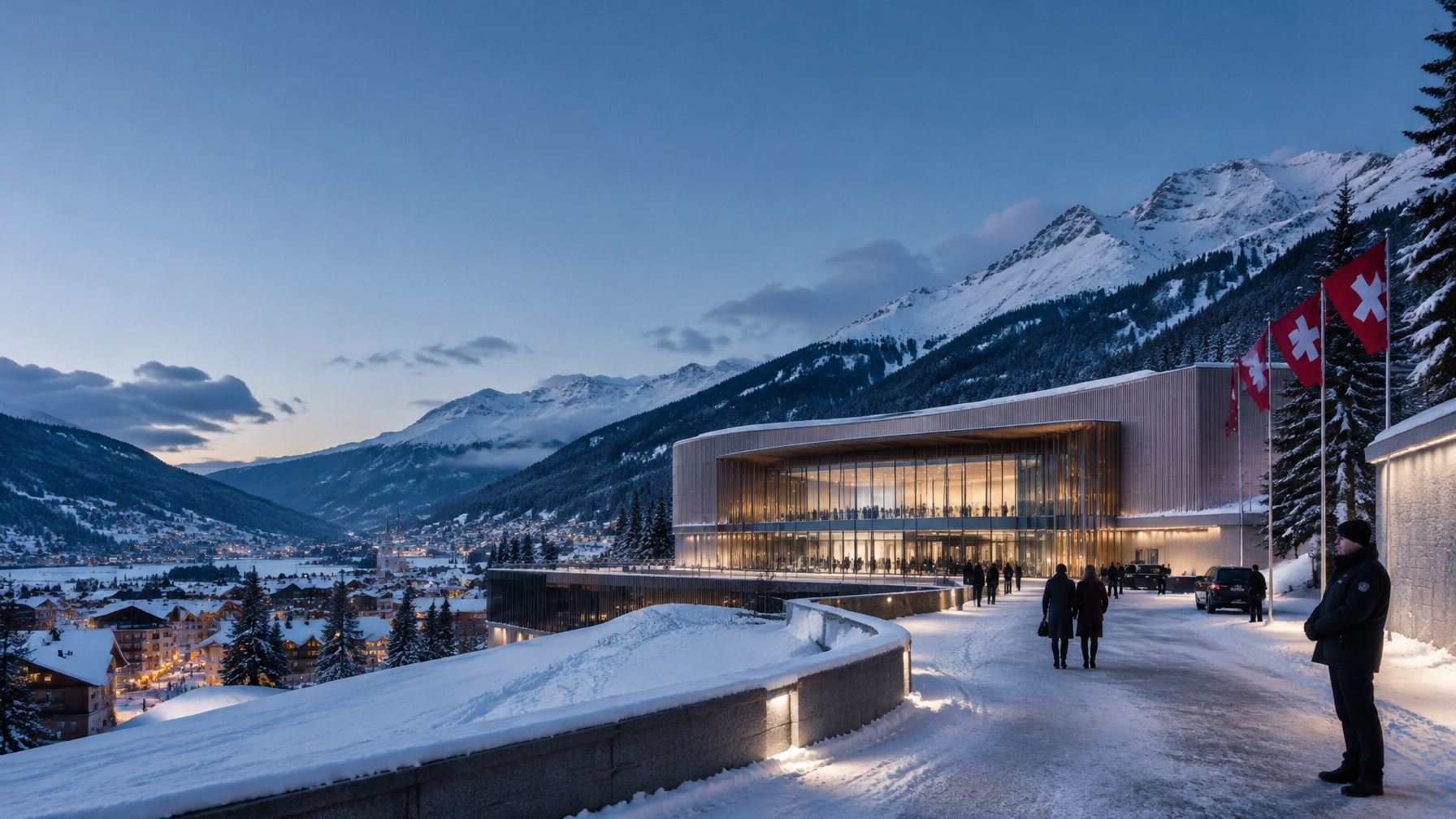
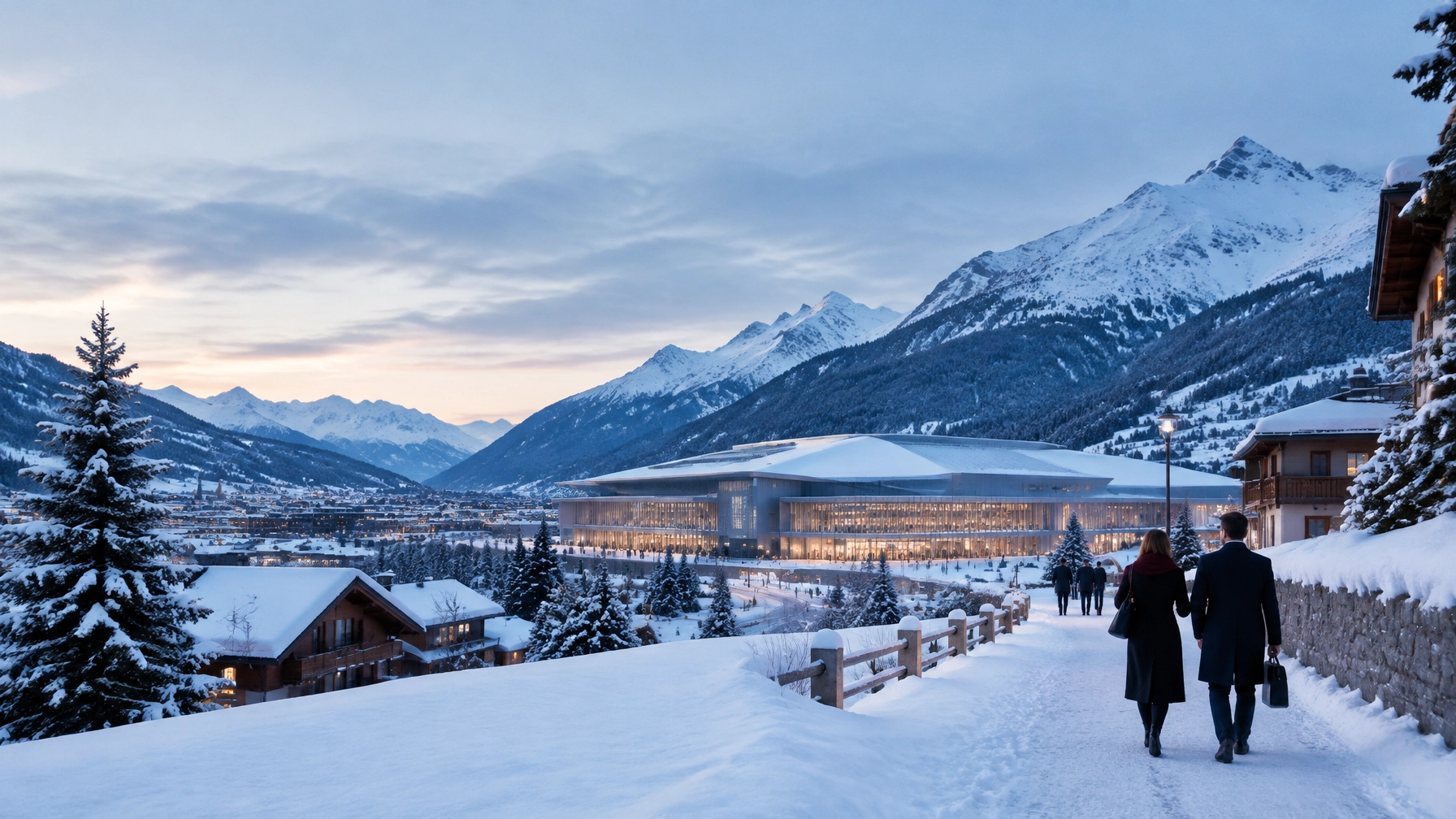
How to attend Davos without a WEF badge is a question of access architecture, not official accreditation. The World Economic Forum’s Annual Meeting takes place from 18–22 January 2027 at the Kongresszentrum Davos, but the wider Davos ecosystem extends across the Promenade, hotels, corporate Houses, country pavilions, private venues, and independent events.
A WEF badge is required for the official Congress Centre programme. It is not required to be in Davos, attend selected public sessions, enter approved side events, or build a serious schedule around the broader network of decision-makers present during the week.
The distinction matters. Davos is not one event. It is a concentrated operating environment with several overlapping layers of access.
What a WEF badge does: and does not: provide
The official WEF badge provides access to the Annual Meeting’s controlled programme, including the Congress Centre and associated restricted areas. It is not publicly available for purchase, and official participation is generally based on invitation, membership, partnership, or institutional standing.
Without that badge, access to the Congress Centre and restricted WEF areas should not be expected.
The wider week remains accessible through other channels:
- Open or RSVP-based public sessions
- Corporate Houses and country pavilions
- Promenade exhibitions and activations
- Independent conferences and side events
- Hotel lounges, breakfasts, dinners, and roundtables
- Curated access programmes
- Direct meetings arranged with participants already in town
The objective is not to replicate the official WEF experience. It is to access the conversations, institutions, and people operating around it.
Start with the official dates
The first planning step is to confirm the official timetable. The Davos tourism authority lists the 2027 Annual Meeting from 18 to 22 January.
Accommodation, transport, and venue capacity become constrained well before January. Davos functions as a normal alpine town outside the meeting, but during the Annual Meeting the supply of rooms, meeting spaces, vehicles, and restaurants tightens sharply.
Plan around four working days:
- Monday: opening programmes, public sessions, receptions, and orientation
- Tuesday and Wednesday: peak networking, House programming, and private meetings
- Thursday: follow-ups, closing discussions, and final dinners
- Friday: departure and post-event coordination
Arriving one day early improves logistics. It provides time to understand the town, identify venues, confirm transport routes, and adjust the schedule before the main flow begins.

Use the Promenade as the primary entry point
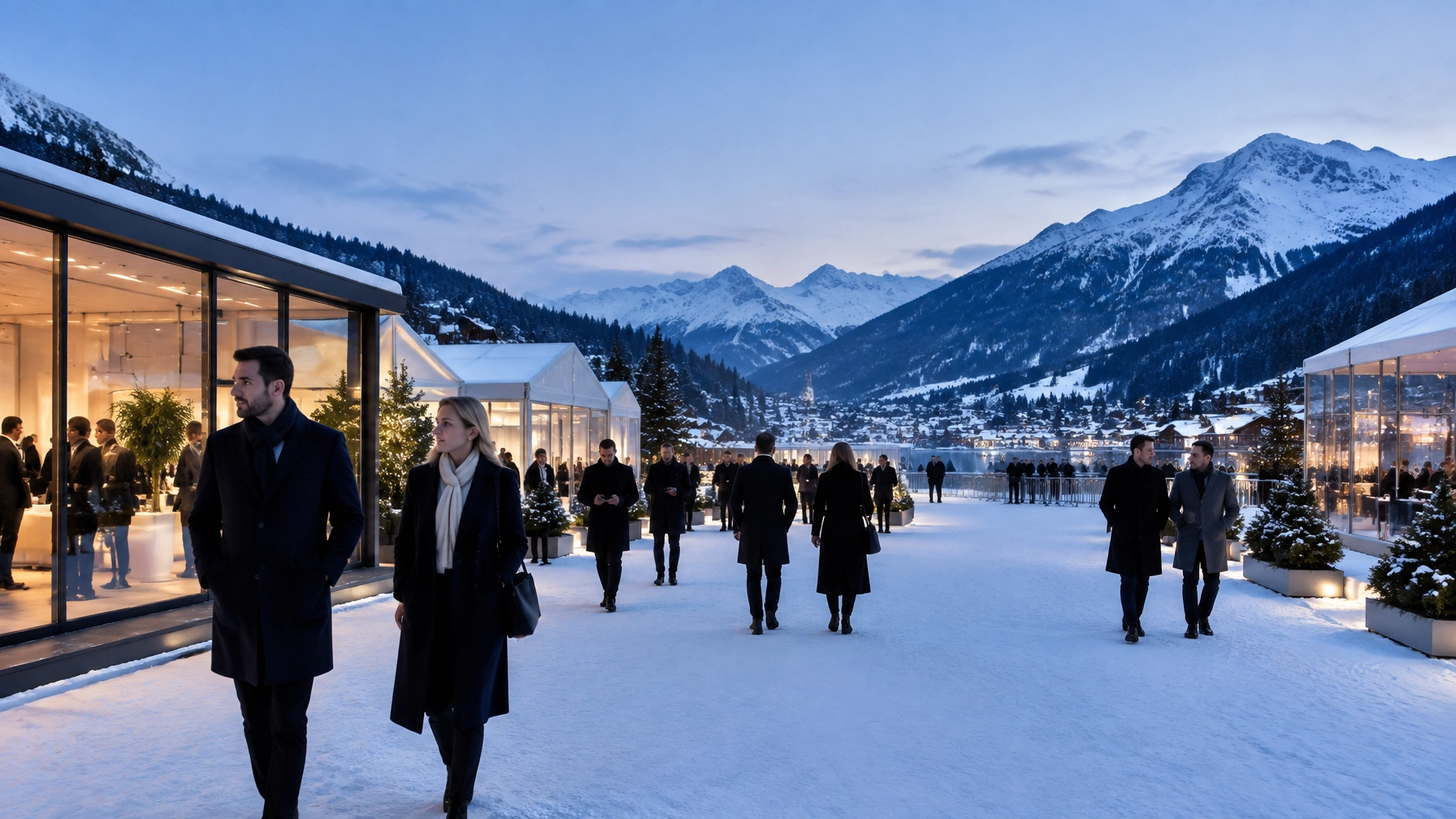
The Promenade is the most visible access point for non-badge participants. During Davos week, it hosts corporate Houses, national pavilions, media studios, exhibitions, restaurants, and temporary venues.
Some programming is open to the public. Some requires advance registration. Some is invitation-only.
The practical approach is to distinguish between the venue and the session. A House may be accessible while a particular roundtable inside it is restricted. A public panel may be open by registration while the evening reception is limited to invited guests.
Monitor:
- House websites and registration pages
- Country pavilion schedules
- Corporate event announcements
- Independent Davos event directories
- LinkedIn announcements from hosts and speakers
- Invitations shared through professional networks
Do not assume that presence on the Promenade guarantees entry. Access is determined by the host, the venue, and the specific programme.
Attend public sessions and the Open Forum
The WEF Open Forum is designed as a public-facing format separate from the closed Annual Meeting. Availability, registration rules, capacity, and session formats can change, so the official page should be checked directly as the 2027 programme develops.
Public sessions are useful for three reasons:
- They provide direct exposure to the themes shaping the week.
- They create legitimate points of contact with speakers and participants.
- They help identify which issues are receiving attention beyond formal agendas.
Arrive early for high-demand sessions. Carry identification and registration confirmation where required. Treat each public session as an intelligence opportunity rather than as a substitute for private access.
The value of the Open Forum lies in orientation and signal detection. The most consequential conversations will often take place elsewhere, but public programming can reveal which themes, institutions, and personalities are influencing the wider week.
Build a House and side-event strategy
Corporate and country Houses operate as temporary institutional platforms. They are used for panels, briefings, receptions, bilateral meetings, media interviews, product demonstrations, and private discussions.
A useful schedule separates events into three categories:
Open events
These include public panels, exhibitions, installations, and selected talks. They are generally the easiest to access and should form the foundation of a non-badge itinerary.
RSVP events
These require advance registration, often through a host website or event platform. Registration does not always guarantee entry. Some venues apply capacity limits, security screening, or priority access for invited participants.
Closed events
These include executive breakfasts, investor dinners, private roundtables, and off-record sessions. Access is usually relationship-based and determined by the host.
The most effective way to reach closed programming is to offer a clear contribution. A relevant institutional perspective, a strong market view, a regional network, or expertise in a specific policy area is more useful than a generic request to attend.
Contact organisers early. A concise note should establish:
- The organisation and role
- The specific issue relevant to the programme
- The reason for requesting access
- The perspective or network that can be contributed
- The preferred format: panel, roundtable, meeting, or briefing
The approach should be professional and specific. Davos organisers receive large volumes of general networking requests. A defined contribution creates a stronger basis for consideration.
Use independent conferences and curated programmes
The Davos ecosystem includes independent conferences, technology showcases, investor gatherings, climate forums, media programmes, and alternative events often described as “fringe” or “unDavos” programming.
These events vary substantially in quality and access rules. Some are open. Some use paid tickets. Others are invitation-based or curated through partners.
Evaluate each programme by asking:
- Who is organising it?
- Which participants are confirmed?
- Is the agenda substantive or primarily promotional?
- Are discussions public, private, or recorded?
- Does the event attract decision-makers relevant to the objective?
- Is the venue within a workable distance of the rest of the schedule?
- What is the cancellation and access policy?
A dense calendar is not necessarily a productive one. Four well-selected meetings can produce more value than twenty loosely connected events.

Consider hotel-zone access separately
Some hotel-zone venues and private programmes use separate credentials or host-controlled access arrangements. These are not WEF badges and do not provide access to the official Congress Centre.
Requirements may include:
- A host invitation
- Advance registration
- Identity verification
- Security screening
- A separate hotel or event credential
- Background checks for certain controlled areas
Availability and requirements vary by year, venue, and organiser. Confirm the exact scope of any credential before committing to it. A pass described as “Davos access” may provide entry to selected lounges or events but not to the official WEF programme.
For executives and investors, hotel-zone access can be valuable because private meetings, breakfasts, and dinners often take place away from public stages. It should be treated as one layer in a wider access plan, not as a substitute for official accreditation.
Design the week around objectives
A successful non-badge strategy begins with a defined objective.
Possible objectives include:
- Tracking policy signals
- Meeting investors
- Understanding sector priorities
- Building government relationships
- Identifying technology partners
- Monitoring geopolitical discussions
- Establishing media visibility
- Conducting market intelligence
- Developing a regional or thematic network
Each objective requires a different calendar.
An investor should prioritise targeted breakfasts, fund meetings, and private dinners. A policy professional may focus on country Houses, public forums, and institutional briefings. A corporate executive may need a combination of customer meetings, sector sessions, and stakeholder events.
Create a short list of priority people and organisations before arrival. Request meetings with a defined purpose and a narrow time window. Fifteen to thirty minutes is often sufficient for an initial conversation.
The calendar should also include travel buffers. Snow, security controls, congestion, and venue queues can make a ten-minute walk operationally significant. Avoid scheduling back-to-back meetings across different ends of Davos.

Use the town as a meeting environment
Davos itself is the operating environment. Meetings take place in hotel lobbies, cafés, restaurants, chalet lounges, transport queues, and informal gathering points as well as inside formal venues.
A meeting request becomes more practical when it includes:
- A specific location
- A precise time
- A short purpose
- A defined duration
- A realistic alternative
Do not rely on spontaneous access to senior figures. Informal encounters can be useful, but they are unreliable as a primary strategy. Preparation increases the value of every unplanned conversation.
The best non-badge participants arrive with a clear map of the ecosystem, not simply a list of events.
What not to claim
A non-badge attendee should not describe attendance as participation in the official Annual Meeting unless formally accredited.
Use precise language:
- “Attending Davos during Annual Meeting week”
- “Participating in Davos side events”
- “Meeting stakeholders in the Davos ecosystem”
- “Attending Promenade and independent programming”
Avoid suggesting access to the Congress Centre, official WEF sessions, or restricted areas without the relevant credential.
Precision protects credibility. It also reflects the actual structure of the week.
The independent intelligence advantage
The Davos ecosystem is wider than the official WEF programme. Understanding it requires tracking the networks, conversations, institutions, and decision-makers operating across both formal and informal settings.
The Davos Collective is independent intelligence focused on this ecosystem and is not affiliated with the World Economic Forum. That independence permits analysis of the wider network without institutional alignment or official dependence.
To attend Davos without a WEF badge, build access through public sessions, Houses, side events, independent programmes, direct meetings, and carefully selected private gatherings. The official badge opens one layer. It does not define the entire week.
Frequently asked questions
Can anyone attend Davos during WEF week?
Yes. Davos remains an operating town, and visitors can stay in the area during Annual Meeting week. Access to specific venues and events remains controlled by organisers, hosts, and security authorities.
Can I enter the WEF Congress Centre without a badge?
No. The Congress Centre programme is restricted to appropriately accredited participants.
Are Davos Houses open to the public?
Some are open, some require registration, and some are invitation-only. Check the rules for each House and each session.
Is the Open Forum the same as the official WEF Annual Meeting?
No. The Open Forum is a public-facing format distinct from the restricted Annual Meeting programme.
When should I begin planning for Davos 2027?
Begin accommodation, transport, and access planning several months in advance. Public and side-event calendars may develop later, but prime accommodation and private meeting availability tighten early.