World Economic Forum 2027 Guide: Dates, Location, Programme, Attendees and Davos Side Events
By The Davos Collective · 24 September 2026 · 8 min read

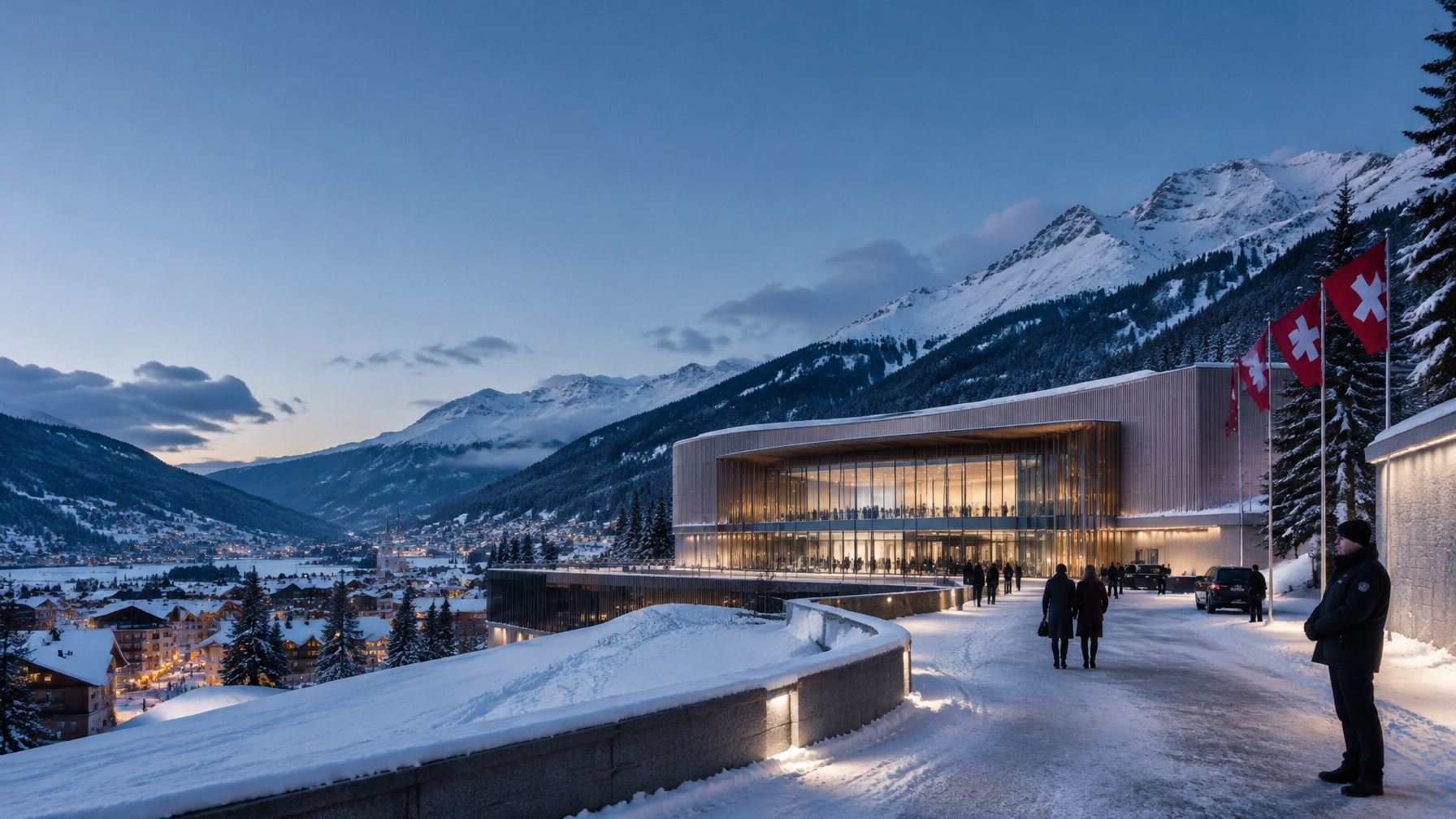
The World Economic Forum Annual Meeting 2027 will take place from 18–22 January 2027 in Davos-Klosters, Switzerland. The official meeting will be centred on the Davos Congress Centre, while a broader ecosystem of houses, private meetings, investor gatherings and public programmes will operate across the town.
For founders, investors, family offices, CXOs and advisors, the practical opportunity lies in understanding the distinction between the official WEF programme and the independent Davos ecosystem around it.
WEF 2027 dates, location and official venue
Item Confirmed information
Event World Economic Forum Annual Meeting 2027
WEF 2027 dates 18–22 January 2027
Location Davos-Klosters, Switzerland
Primary venue Kongresszentrum Davos, Talstrasse 49A, 7270 Davos Platz
Expected official participants Approximately 3,000
Organiser World Economic Forum
Access Invitation and accreditation-based
The Davos destination authority and Davos Congress Centre confirm the dates and primary venue.
The official meeting brings together business leaders, heads of government, investors, international organisations, academics, civil society representatives, media and cultural figures. It is a controlled, accreditation-based environment rather than a conventional public conference.

World Economic Forum 2027 events and programme
The detailed World Economic Forum 2027 events programme has not yet been fully published. The final agenda is expected to establish the principal themes, session formats, speakers and public-facing activities closer to the meeting.
The official programme generally includes:
- Plenary sessions and public discussions
- Closed-door working sessions
- Bilateral meetings between political and business leaders
- Partner and member programming
- Media briefings and interviews
- Selected Open Forum and public-access sessions
- Thematic discussions on economic, geopolitical, technological and societal issues
The World Economic Forum meetings page remains the relevant source for official programme announcements. Unconfirmed themes, speaker lists and session schedules should not be treated as final until published through official WEF channels.
For executives planning their week, the programme should be viewed as one layer of the Davos agenda. Many commercially relevant conversations take place outside the Congress Centre, often in smaller settings where access is determined by the host rather than by WEF accreditation.
Who is attending Davos 2027?
The question “Who is attending Davos 2027?” has two answers: official participants and the wider Davos population.
The official meeting is expected to include approximately 3,000 participants from:
- Governments and public institutions
- Global and regional businesses
- Investment firms and family offices
- International organisations
- Universities and research institutions
- Civil society and non-governmental organisations
- Media and cultural institutions
The Davos attendee list 2027 is unlikely to be fully available in advance. Attendance announcements are typically fragmented across official releases, company statements, government communications, event pages and trusted media reporting.
The wider ecosystem includes founders, venture investors, consultants, policy specialists, technology companies, professional services firms, national delegations, journalists and event organisers. Many will not enter the Congress Centre but will participate in the parallel programme.
For India-focused participants, the India delegation Davos 2027 will be relevant across government, technology, financial services, infrastructure, manufacturing, climate, healthcare and consumer sectors. The composition and public schedule of any delegation should be verified through official institutional sources.
How to assess the attendee landscape
A useful working model is to separate attendees into four groups:
Group Typical access Primary objective
Official delegates WEF accreditation Policy, institutional and strategic discussions
Corporate participants WEF, partner or host access Business relationships and sector engagement
Side-event participants Invitation or registration Networking, capital, partnerships and visibility
Local and media ecosystem Event-specific access Coverage, analysis and stakeholder engagement
This distinction matters because a person listed as “attending Davos” may be participating in the broader ecosystem without attending the official Annual Meeting.
Davos side events 2027 and independent houses
The Davos side events 2027 programme will operate across hotels, conference venues, private residences, restaurants and temporary event spaces. These events are organised by companies, governments, investors, foundations, media organisations and professional networks.
Common formats include:
- Investor breakfasts
- Founder and technology roundtables
- Private dinners
- National and regional house programmes
- Corporate briefings
- Sector-specific forums
- Policy discussions
- Media and broadcast events
- Reception and networking programmes
The Davos houses 2027 calendar will develop progressively as hosts confirm locations, partners, speakers and registration procedures. Houses may be open to selected participants, invitation-only or available through paid registration. Their proximity to the official meeting does not imply formal WEF affiliation.
The Promenade is typically the centre of the parallel ecosystem. Hotels and venues along the main route become meeting points for executives, investors, government representatives and advisers. The practical value of a side event depends less on its branding than on the quality and relevance of its participant base.

How to attend Davos without a WEF badge
The question “How to attend Davos without a WEF badge?” is operational rather than theoretical. A WEF badge is required for access to the official Congress Centre and designated security zones. It is not required for most independent events across Davos.
A practical route involves:
- Identifying relevant houses, forums and private events.
- Checking whether the host offers open registration, an application process or invitation access.
- Completing Davos event registration directly through the organiser.
- Confirming venue, timing, identification requirements and cancellation rules.
- Building a schedule around confirmed meetings rather than attempting to attend everything.
- Allowing additional time for security controls, weather and movement between venues.
Access policies vary significantly. Some events are public; others require a host invitation, corporate affiliation, investor profile or participation fee. A confirmed side-event registration does not provide access to the WEF Congress Centre.
The most productive Davos networking events are usually smaller, curated gatherings with a clear sector or investment focus. A dense calendar of generic receptions often produces less value than a limited number of targeted meetings.
Davos investors 2027 and deal opportunities
For Davos investors 2027, the week can function as an international market-mapping exercise. The strongest opportunities often emerge from conversations around capital allocation, strategic partnerships, market entry, policy direction and technology adoption.
Relevant areas may include:
- Artificial intelligence and digital infrastructure
- Energy transition and industrial technology
- Climate finance and adaptation
- Healthcare and life sciences
- Financial services and private markets
- Emerging-market growth
- Defence and critical infrastructure
- Supply-chain resilience
- Climate and sustainability reporting
Davos deal opportunities should be assessed with normal investment discipline. Presence at a house, a meeting with a senior executive or a discussion at a private dinner is not evidence of commercial viability.
A useful pre-Davos preparation framework includes:
Preparation area Practical question
Investment thesis Which sectors and geographies are priorities?
Target counterparties Which investors, founders or institutions matter?
Meeting objective Information, capital, partnership or market access?
Evidence What data would change the current view?
Follow-up Who owns the next step after the meeting?
The value of Davos is often cumulative. One meeting may establish context; a second may test alignment; a third may determine whether a relationship merits formal diligence.
Davos accommodation and venues
The Davos accommodation and venues market is constrained during Annual Meeting week. Hotels, serviced apartments, private residences and event spaces are typically committed well in advance.
Key considerations include:
- Location relative to the Promenade and Congress Centre
- Transport arrangements during restricted access periods
- Meeting-room availability
- Internet reliability and privacy
- Cancellation and minimum-stay policies
- Security and guest-registration requirements
- Access to early-morning and evening programmes
Davos Platz is generally the central operating base for the official meeting and many side events. Davos Dorf and surrounding areas may provide additional accommodation but require more planning for daily movement.
The Davos Congress Centre visitor information notes that Davos can be reached from Zurich Airport in approximately two hours, subject to weather and traffic conditions.

Official WEF meeting versus independent Davos ecosystem
Feature Official WEF Annual Meeting Independent Davos ecosystem
Organiser World Economic Forum Companies, governments, investors and networks
Venue Davos Congress Centre and controlled zones Hotels, houses, venues and private spaces
Access Invitation and accreditation Invitation, registration or open access
Scale Approximately 3,000 official participants Broader and decentralised participation
Format Plenary, working and formal sessions Houses, dinners, roundtables and receptions
WEF badge Required Usually not required
The distinction is essential for planning, communications and due diligence. The Davos ecosystem operates alongside the official WEF meeting but is not synonymous with it.
The Davos Collective provides independent intelligence on this ecosystem and is not affiliated with the World Economic Forum.
Frequently asked questions
What are the WEF 2027 dates?
The World Economic Forum Annual Meeting 2027 is scheduled for 18–22 January 2027 in Davos-Klosters, Switzerland.
Where is the World Economic Forum Annual Meeting 2027 held?
The primary venue is the Kongresszentrum Davos, located at Talstrasse 49A, 7270 Davos Platz, Switzerland.
Can I attend Davos side events without a WEF badge?
Yes. Many independent events do not require WEF accreditation. Access depends on the organiser and may require registration, an invitation, an application or a participation fee.
When will the official Davos 2027 programme and attendee list be published?
The detailed programme and confirmed participant information are expected to be released progressively. The official World Economic Forum website should be used for final confirmation.
Conclusion
Davos 2027 will comprise two connected but distinct environments: the invitation-only World Economic Forum Annual Meeting and a wider network of independent events, houses, investors and decision-makers operating across the town.
The most effective preparation combines verified dates, targeted registration, disciplined meeting objectives and a clear distinction between official WEF access and the broader Davos ecosystem.