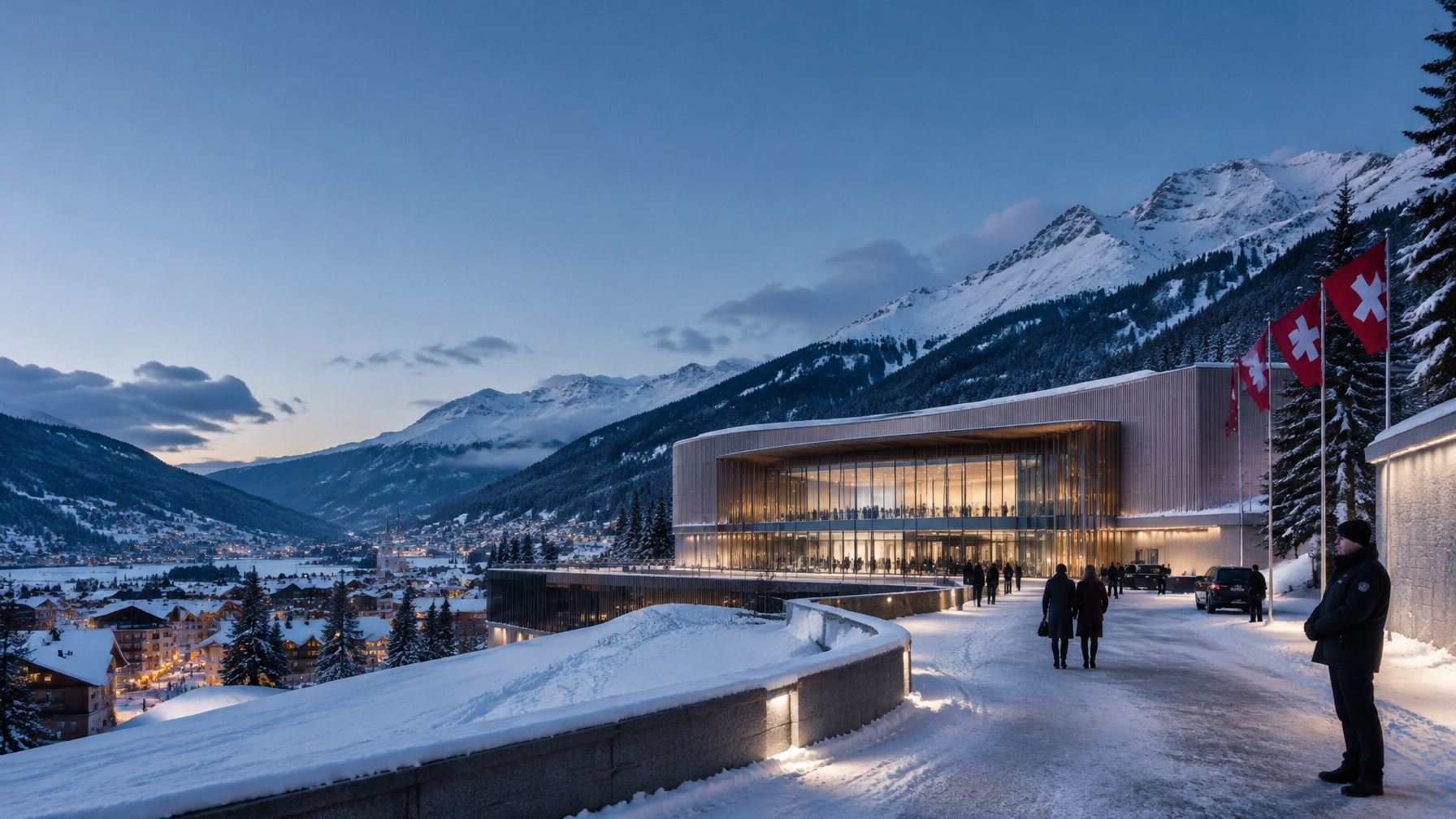
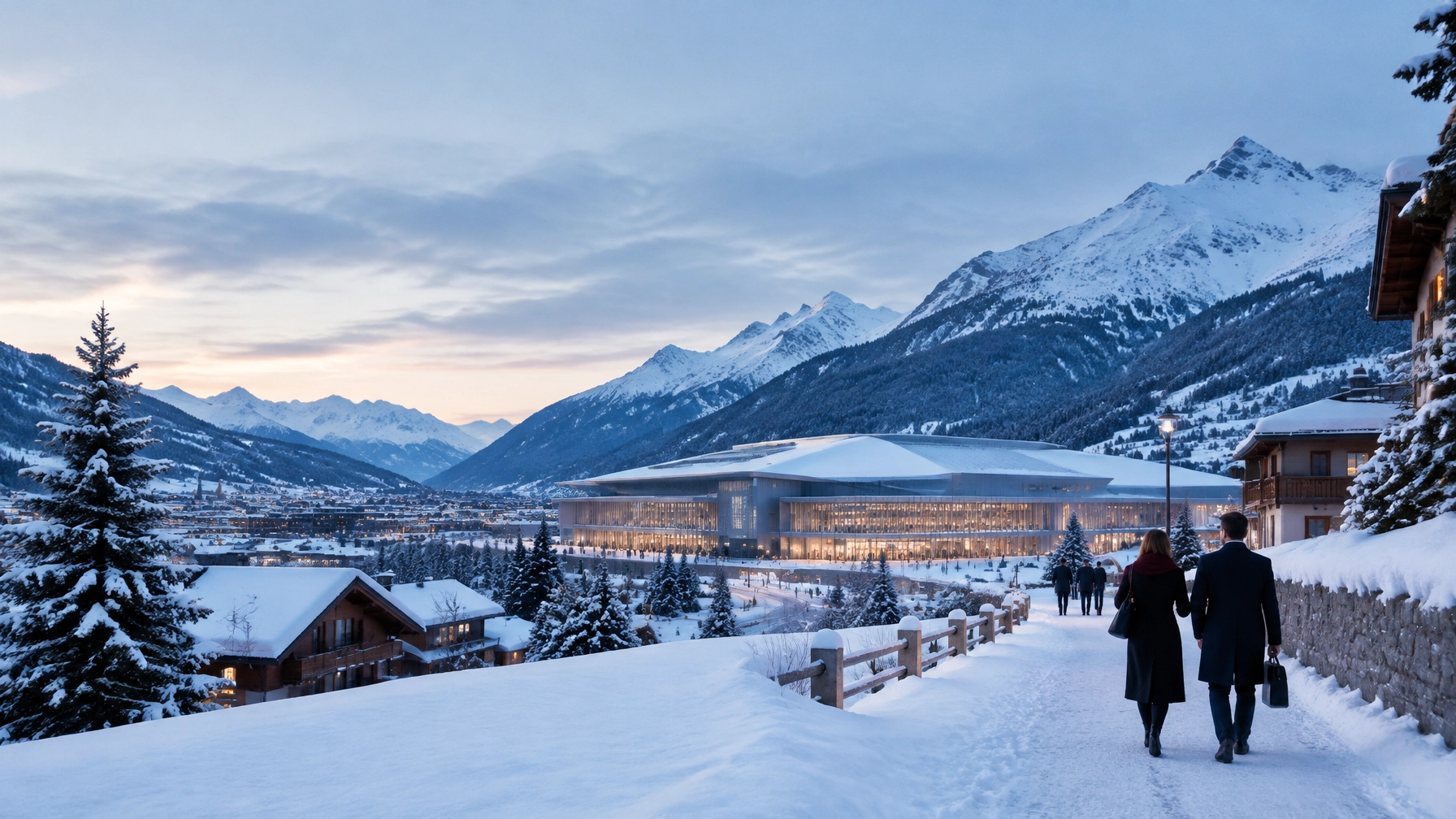
A Day at Davos 2027: The Hour-by-Hour Rhythm of WEF Week
By The Davos Collective · 10 October 2026 · 11 min read
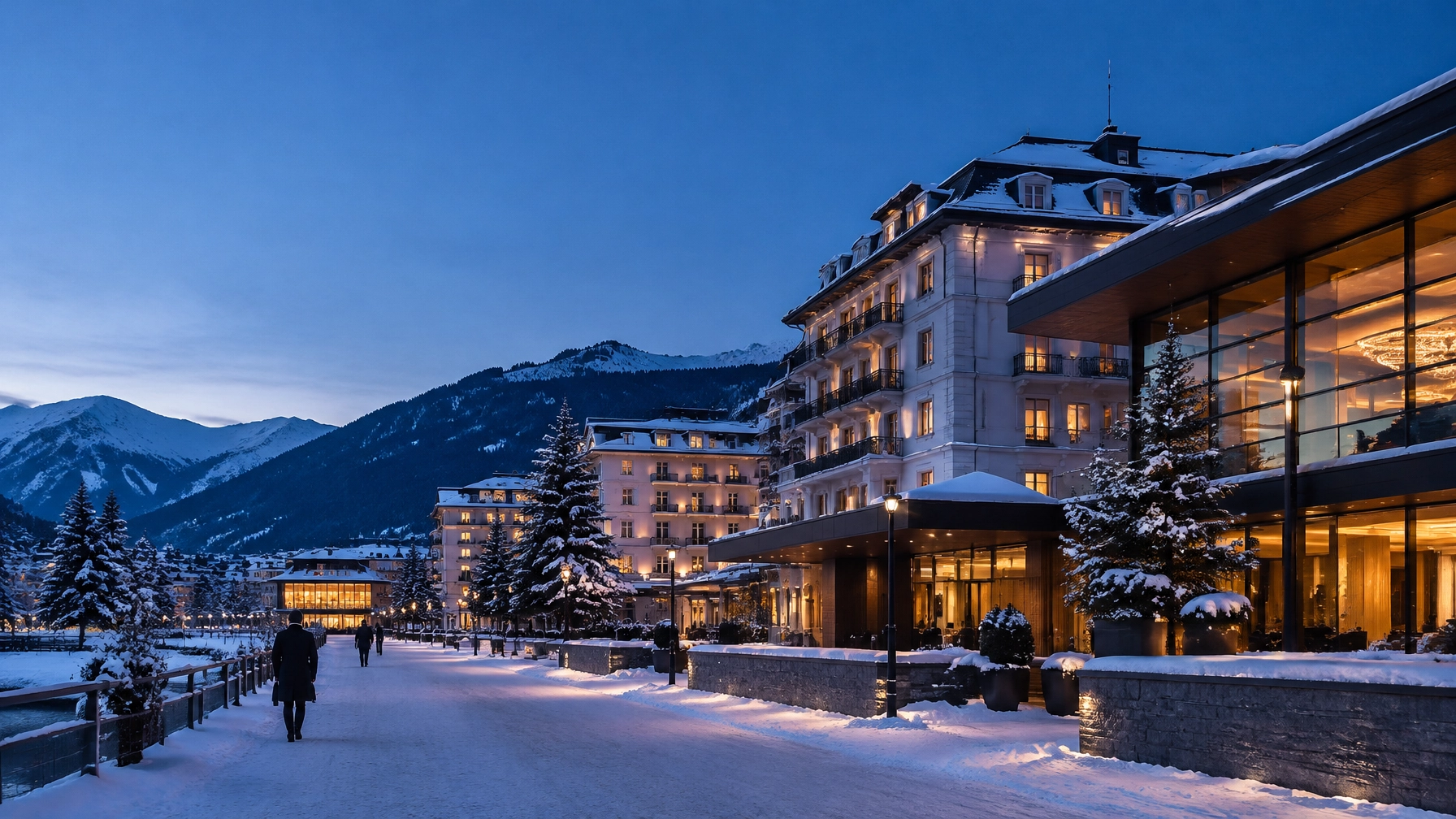
Davos 2027 events follow a fixed daily rhythm rather than a single official schedule, and understanding that rhythm is central to effective Davos networking events, meeting design and Davos event registration strategy. The Davos Collective provides independent intelligence on the Davos ecosystem and is not affiliated with the World Economic Forum.
WEF week is not one schedule. It is several hundred rooms across one 6km valley, and the difference between a productive Davos week and an exhausted one is understanding how the day is shaped before you arrive.
That matters for every category of participant: delegates tracking World Economic Forum 2027 events, operators managing Davos side events 2027, investors assessing Davos deal opportunities, teams reviewing Davos accommodation and venues, and first-time visitors asking how to attend Davos without a WEF badge. The public narrative suggests a single centre of action. The operating reality is a distributed system of breakfasts, badge-controlled sessions, private houses, hotel lounges, dinners, cars, trains, checkpoints and walking corridors that compress and expand by the hour.
For anyone planning around WEF 2027 dates, the practical question is not simply what is on. It is what the day is for at each point in the cycle, which rooms actually matter, when people can still take a meeting, and where movement across town starts to fail. That is the basis of a useful Davos attendee list 2027 strategy, a realistic view of who is attending Davos 2027, and a stronger approach to Davos houses 2027, bilateral meetings and private dinners.

The shape of a Davos day
A Davos day starts before the formal programme. By 07:00, breakfast tables are already active, often with stronger attendance discipline than later public panels. Between breakfast and the first formal session block, the valley enters its first congestion phase: venue entries tighten, drivers stall, pavements fill, and the simple act of crossing between Davos Platz and Davos Dorf begins to consume schedule.
From roughly 09:00 through late afternoon, Davos 2027 events split into parallel tracks. The Congress Centre runs official sessions. Davos side events 2027 and house programming absorb executives, policy teams, advisers, media and investors. Hotel lobbies become holding rooms for informal conversations that were not planned well enough to deserve a dedicated slot but still matter. Working lunches and private dining rooms then take over the middle of the day, before afternoon roundtables and lounge meetings produce a second wave of useful access.
The highest-status energy of the week often sits in the evening, not the stage programme. Private dinners remain the centre of gravity because they offer smaller rooms, longer dwell time and more focused attendance. After dinner, receptions, lounges and late hotel circuits continue the flow. After midnight, the value can remain high, but control over timing, composition and outcome drops sharply.
Master table: a single WEF day, hour by hour
Time What is running Who is in the room What the slot is good for
06:30 First movement, hotel departures, early staff calls, Promenade quiet Production teams, security staff, a few disciplined principals, assistants Positioning early, crossing town before congestion, resetting a damaged calendar
07:00–08:30 Breakfast roundtables and bilateral breakfasts CEOs, ministers, investors, policy principals, hosts protecting high-value access High-yield relationship time, small-room visibility, first conversation of the day
08:30–09:30 Transition peak, badge checks, coat drop, venue entry queues Delegates moving into official and house programming, drivers under pressure, media crews Buffer time only; avoid ambitious meeting design in this band
09:00–12:00 Congress Centre sessions, house panels, first formal meetings WEF badge-holders, speakers, press, policy teams, corporate public affairs leads Stage visibility, first formal meetings, market scanning, mapping who is attending Davos 2027
12:00–14:00 Working lunches, private dining rooms, host tables, invite-only lunches Investors, chairs, government officials, senior operating executives, select advisers Relationship advancement, tactical deal work, quiet calibration away from public sessions
14:00–16:00 Afternoon roundtables, lounge conversations, bilateral meetings, side-event spillover Mixed seniority rooms, sector communities, country delegations, Davos investors 2027 Practical follow-up, sector intelligence, lower-friction meeting density
16:00–18:00 The last formal block, most under-used Attendees still disciplined enough to stay on schedule, hosts with open capacity One of the best slots for substantive meetings, lower competition, cleaner attendance
18:00–19:00 The gap: change, reset, walk Everyone in transit between day and evening formats Leave empty; use for movement, clothing change, schedule repair, phone reconfirmations
19:00–21:30 Private dinners, hosted suppers, closed-door tables, the week's centre of gravity Chairs, ministers, investors, founders, family offices, select media and advisers The strongest slot for trust-building, alignment, and Davos deal opportunities
21:30–00:00 Receptions, hotel lounges, nightcaps, after-dinner hosting Mixed invite lists, relationship-led networks, overflow from dinner circuits Soft follow-up, introductions, keeping momentum with lighter structure
After midnight Informal, high value, low control Narrow circles, opportunistic clusters, hosts and guests still moving Serendipity, candid exchanges, limited reliability for first meetings
Monday to Friday: what each day is actually for
The rhythm of one day sits inside the rhythm of the week. This is where many calendars fail. Visitors often overload Wednesday because the invitation volume is highest, then discover that actual conversion happens later when density falls. For planning against WEF 2027 dates, each day has a distinct operating function.
Davos week operating table, 18–22 January 2027
Date Day What the day is actually for Practical reading
18 January 2027 Monday Arrivals have landed, energy is high, the programme is light Best for relationship-setting, soft starts, low-competition meetings, first positioning across Davos houses 2027
19 January 2027 Tuesday The week opens properly, densest day, protect the calendar Strongest discipline required; too many invitations, too little movement capacity
20 January 2027 Wednesday Peak density, most competitive day for attention, most invitations land here Best for priority rooms only; decline aggressively to preserve outcomes
21 January 2027 Thursday The dealmaking day, second-tier attendees have left, rooms are quieter, conversions happen Often the best day for serious follow-up, investor conversations and close-range negotiation
22 January 2027 Friday Collapses after midday, morning only, use it for close-outs and departures Reserve for breakfast, a final bilateral, team debriefs and departure logistics
Monday 18 January: low competition, high utility
Monday is structurally under-valued. The official machine has not fully compressed, but the serious attendees are already in town. For teams focused on India delegation Davos 2027 tracking, country-house mapping, or investor relationship-building, Monday offers cleaner access and less friction. This is the day to establish first contact, physically inspect venues, and calibrate who is actually present versus who is merely expected on a draft Davos attendee list 2027.
Tuesday 19 January: the calendar stress test
Tuesday is where overbooking begins to punish weak planning. Official programming is fully live, houses are active, bilateral demand spikes, and every 15-minute assumption starts to break. This is not the day for speculative movement. Protect anchors, preserve buffers and reject anything that depends on traffic behaving normally.
Wednesday 20 January: density peak
Wednesday attracts the broadest spread of invitations, panels, dinners and receptions. It is also the hardest day on which to extract attention from senior people. If the objective is visibility, Wednesday matters. If the objective is outcomes, it often underperforms unless the day was locked early and built around very few fixed commitments.
Thursday 21 January: conversion day
By Thursday, the valley is still active but the noise level drops. Some lighter participants are leaving. Hosts have better room to think. Follow-up is easier. Decision-makers are more willing to move from broad Davos networking events into narrower commercial, policy or partnership conversations. For many teams, this becomes the best day for Davos deal opportunities.
Friday 22 January: morning only
Friday is not a full working day. Breakfasts still matter. A final morning session can work. But by lunchtime, departures dominate and the operating week is effectively over. Any plan that depends on meaningful Friday afternoon access is weak by design.

How many rooms can one person actually take

The arithmetic of a real Davos day is harsher than most first schedules assume. On paper, a participant can place breakfast at one hotel, a 09:00 panel at the Congress Centre, a 10:00 coffee in Dorf, a noon lunch in Platz, a 14:00 roundtable back uphill, a 16:30 bilateral in another house, and then dinner across town. In the valley, that pattern fails.
The reason is cumulative drag. A nominal 15-minute walk becomes 25 minutes once boots, ice, crowding, crossings, lifts and coat handling are included. On peak stretches, the Promenade can turn a 15-minute point-to-point movement into 35 minutes. Security checkpoints add uncertainty rather than duration alone: one slow queue can break the next two commitments. Cars are not a universal solution. Frozen traffic, controlled access and tactical road closures can make a vehicle slower than walking or rail.
The usable unit of planning is therefore not the raw number of invitations received, but the number of fixed points one person can absorb without degrading performance. In most cases, three to five fixed points in a day is a strong day, not a weak one. A breakfast, one morning anchor, one lunch, one afternoon anchor and one dinner is already close to full capacity if those rooms are materially important.
That conclusion matters for teams trying to cover World Economic Forum 2027 events comprehensively. No single person can do that. Coverage requires role separation: one person for official sessions, one for investor mapping, one for houses and side events, one for evening network maintenance. The more seriously a team treats time arithmetic, the more value it extracts from the week.
The buffer rules

A functional Davos calendar depends less on ambition than on spacing. The basic operating rules are simple.
- Treat every 10-minute walk as 25 minutes in a live calendar.
- Never book back-to-back across Platz and Dorf.
- Use the RhB hop between Platz and Dorf as a 4-minute alternative to frozen bus traffic when timing is tight.
- Leave the 18:00–19:00 gap empty.
- Reconfirm by phone, not email, on the day.
- Snow and altitude both cost time.
Each of these rules reflects a recurring failure mode. Distance in Davos is deceptive because the map is short but the valley is friction-heavy. Across WEF 2027 dates, weak plans fail not because people are late once, but because they are late three times in succession and lose confidence in the entire day. The objective is not perfect punctuality. It is preserving enough slack that the day can absorb weather, checkpoints, overruns and last-minute invitation shifts.
The daily operating kit
The week rewards basic physical discipline more than most conference environments. Davos accommodation and venues sit at 1,560 metres, temperatures punish bad footwear, and the social density of the calendar creates long periods without recovery space. A minimal operating kit prevents small issues from becoming schedule failure.
- Hydration at 1,560 metres.
- Layered tailoring under the coat rather than a single heavy outfit.
- Deep-lug winter boots outside, with dress shoes carried for indoor use if needed.
- Two charged devices plus printed confirmations.
- A single written day sheet.
- Cash for incidentals.
These are not cosmetic preferences. Hydration supports cognitive endurance. Layering helps people move between frozen streets and overheated rooms. Printed confirmations remain useful when batteries fail, signal drops or assistants need to redirect movement quickly. A single written day sheet reduces the fragmentation created by five separate invitation sources. Even participants with full support teams benefit from a compressed personal operating plan.
Frequently asked questions
What time does the day actually start?
In practical terms, the day starts at 07:00 with breakfast roundtables and bilateral breakfasts. The first formal sessions usually begin from 09:00, but serious relationship activity starts earlier.
What time do dinners start?
Most important dinners begin around 19:00. Some guests arrive slightly later, but the useful operating assumption is that evening programming becomes the main focus from 19:00 to about 21:30.
Which day is densest?
Wednesday is usually the peak-density day. It attracts the highest volume of invitations, the widest spread of public and private programming, and the greatest competition for attention.
How long does the Promenade actually take to cross?
At peak periods, crossing the main flow can take about 35 minutes in real conditions, even when the map suggests much less. Crowd density, snow, checkpoints and stop-start movement all add delay.
When does Friday end?
The week is effectively over by mid-afternoon on Friday, and often earlier in practical terms. Morning meetings still work; afternoon plans are materially less reliable.
Conclusion
A Davos day has a shape. Plan against it rather than through it.
That applies across Davos 2027 events, WEF 2027 dates, Davos networking events, Davos side events 2027, Davos houses 2027, investor coverage, country delegation tracking and practical questions such as Davos event registration or how to attend Davos without a WEF badge. The goal is not to attend everything. It is to understand which hours produce access, which hours destroy calendars, and which parts of the valley remain usable at each point in the week.
The Davos Collective provides independent intelligence on the Davos ecosystem. It is not affiliated with the World Economic Forum.