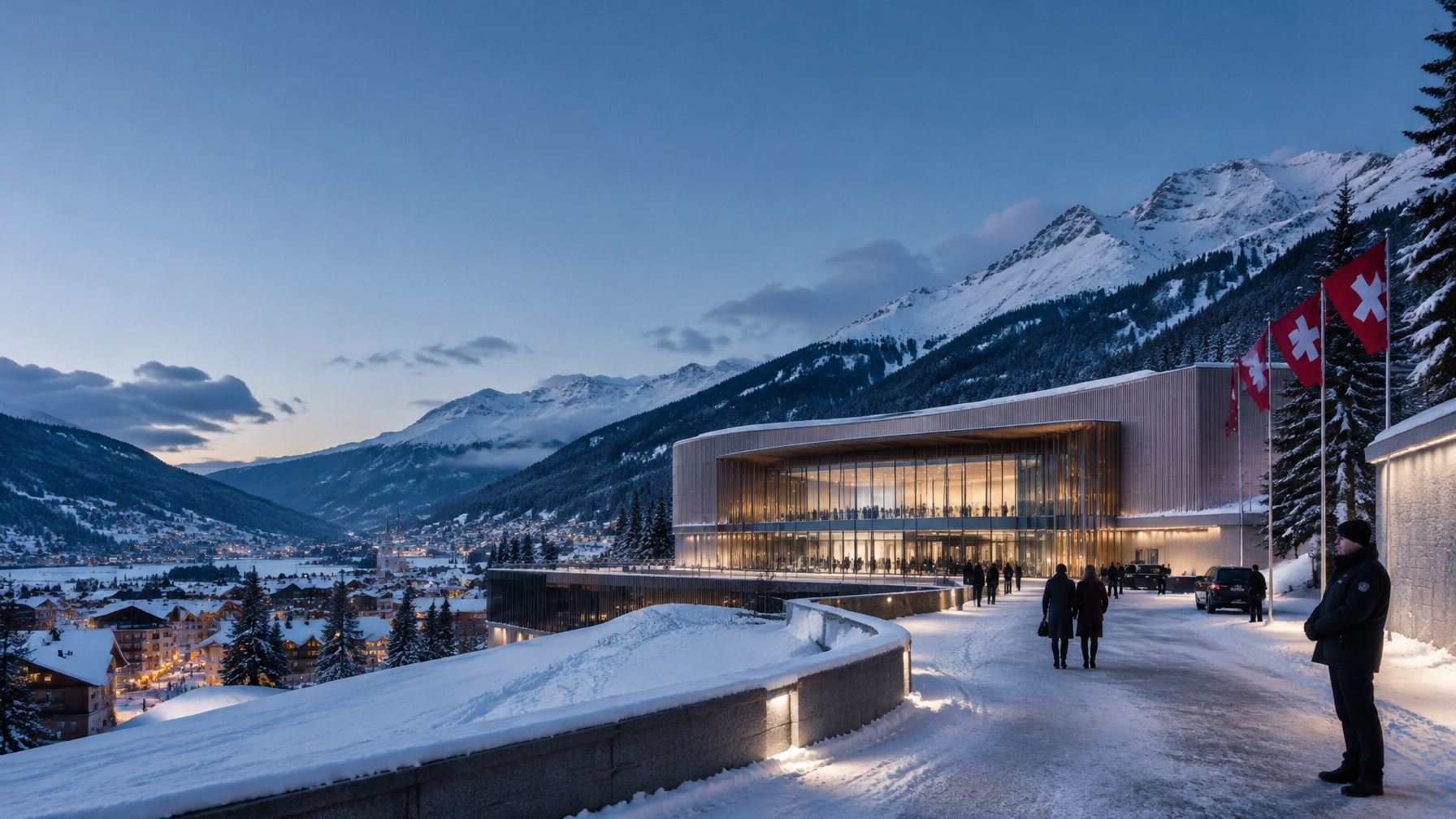
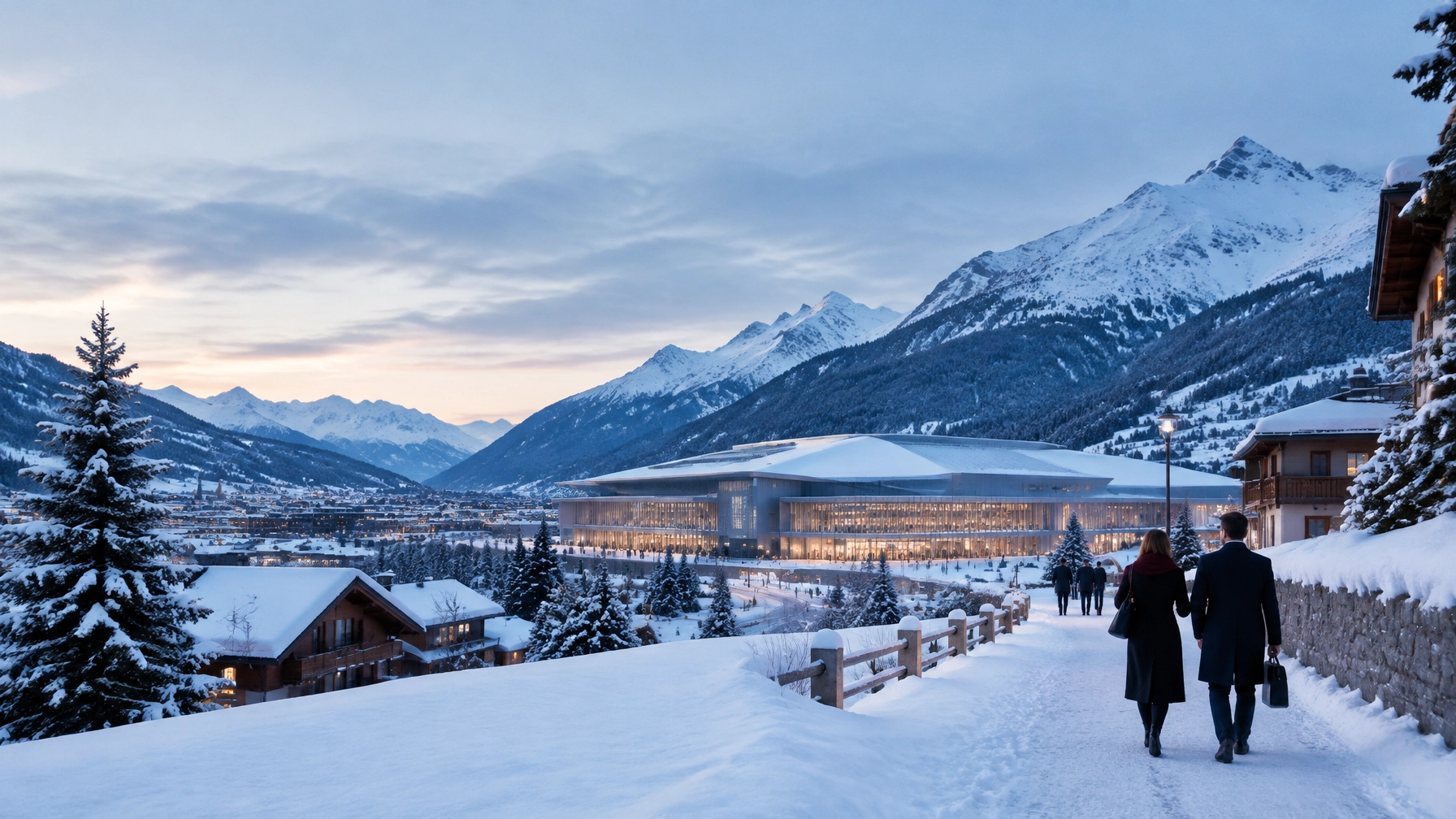
Davos Houses 2027: Inside the Most Influential Venues
By The Davos Collective · 14 September 2026 · 8 min read
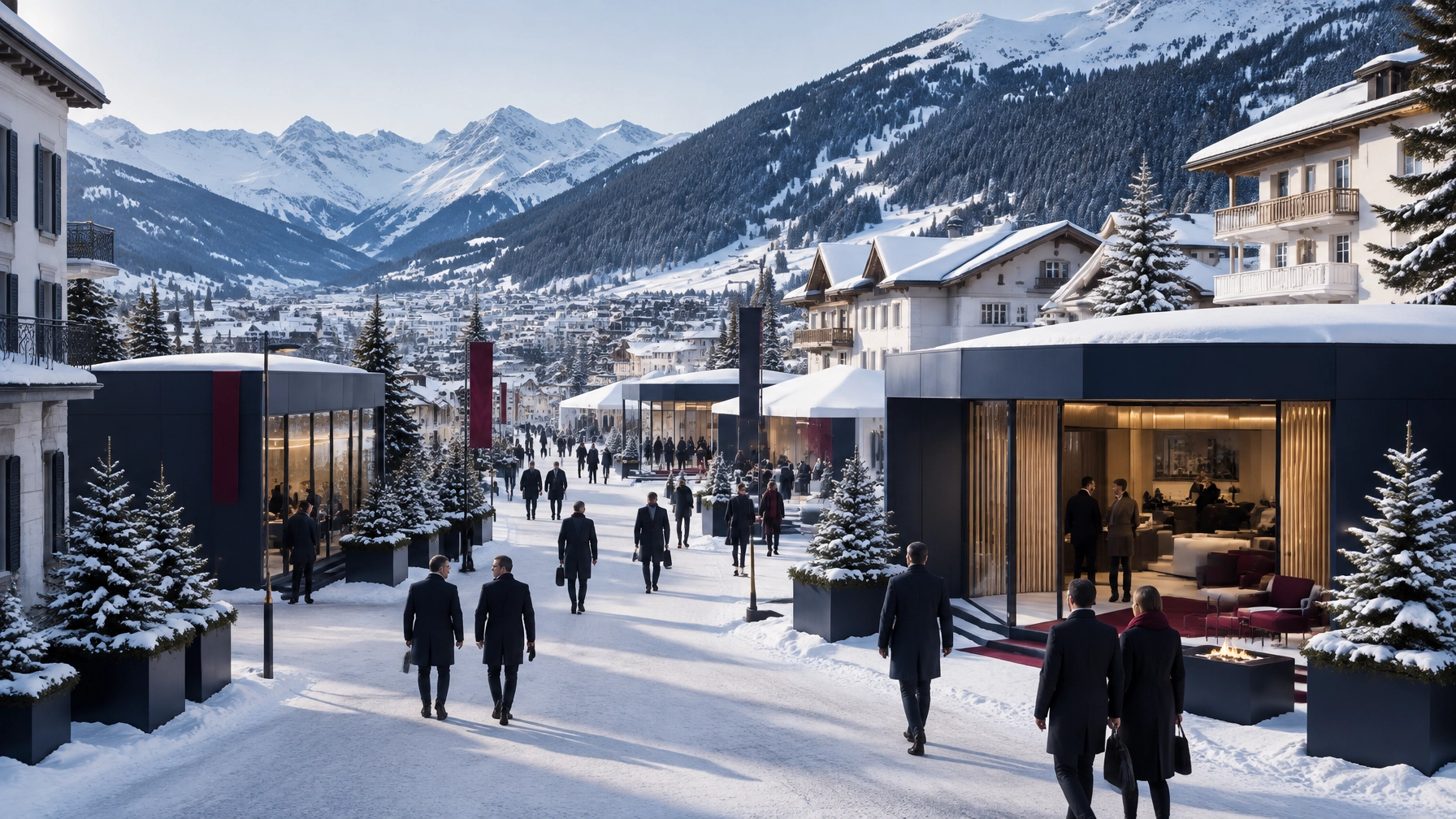


Davos houses 2027 are the parallel venue system that sits beside the official Congress Centre: branded hospitality houses, private chalets, hotel salons, temporary pavilions, media studios and investor rooms that absorb a large share of the week’s real access, private scheduling and off-stage influence. For anyone tracking World Economic Forum 2027 events, Davos side events 2027, Davos networking events and Davos deal opportunities, these houses matter because they are where public positioning turns into controlled conversation.
A hospitality house in Davos is typically a temporary branded venue operated by a company, investor, government, media group, advisory firm or ecosystem partner for the summit week. Some occupy street-level retail units on the Promenade; others take over hotel floors, chalets, restaurants, lounges or reconfigured heritage spaces. Their purpose is straightforward: host curated audiences, create repeat footfall, manage stakeholder access and run a private program around the official meeting calendar. In practical terms, Davos houses 2027 will again function as the operating layer between formal summit theatre and actual relationship-building.
This distinction matters. The Congress Centre carries the authority of the formal annual meeting, official panels and badge-controlled convening. The houses carry something different: flexibility, message discipline, private hospitality and room for negotiations that do not fit the stage. The result is a two-track Davos. One track is visible and institutional. The other is distributed across the town through invitation lists, breakfast salons, bilateral rooms, dinner tables and closed investor sessions. Serious participants follow both.
Recent years have shown how concentrated this ecosystem has become along the Promenade and nearby landmark properties. Google House has been among the best-known branded presences, using a dedicated venue format for leadership conversations, technology positioning and high-level guest hosting. Qualcomm Haus has signalled the hardware, connectivity and AI-policy agenda through branded programming and executive access. Tech Mahindra has used a visible pavilion format to place India-linked technology, digital transformation and enterprise narratives into the Davos flow. Axios House has demonstrated how media operators use interview-driven programming and curated audiences to create a secondary agenda alongside official sessions.
Media and platform players have been especially important to the house ecosystem. Journal House / WSJ at the Grandhotel Belvédère has represented the fusion of journalism, executive access and convening power in one of Davos’s most recognisable hotel settings. TPC House has served as another example of a venue designed around targeted communities and scheduled stakeholder traffic rather than broad public attendance. Meta’s presence in recent Davos cycles has reflected the pattern of major technology firms using selective physical footprints, closed meetings and thematic panels rather than only open-brand spectacle. USA House, notably staged in a converted church in one recent year, illustrated how national branding, soft power, investment promotion and policy dialogue can be packaged into a single memorable venue outside the Congress Centre.
What happens inside these houses is more consequential than the exterior branding suggests. Programming usually begins early with breakfast briefings for investors, policymakers, founders and advisers. Through the day come panel discussions, fireside conversations, studio interviews, press moments and sector roundtables on AI, climate finance, defence tech, energy transition, digital regulation, health systems and cross-border capital. Behind that visible layer sits the more valuable sequence: bilateral negotiations, private dinners, chairman-level introductions, family office meetings, sovereign conversations, board-member catchups, recruitment outreach and rapid-response diplomacy between public and private actors.
A single Davos house can operate as several venues at once. The front room hosts a public-facing panel. An upstairs lounge runs investor roundtables. A side salon handles bilateral negotiations. The evening converts into a sponsor dinner or by-invitation reception. This density is precisely why Davos houses 2027 deserve close attention. They compress distribution, hospitality, narrative management and access into one address. For companies and delegations, that is efficient. For observers, it is where one can map influence with more precision than by following official speeches alone.
The investor function is especially important. Many houses are built not primarily for media visibility but for capital formation and strategic filtering. Private equity firms, sovereign investors, venture platforms, banks and corporate strategy teams use house programs to qualify counterparties quickly. A roundtable over ninety minutes can replace weeks of scheduling elsewhere. For those tracking Davos investors 2027, Who is attending Davos 2027, the Davos attendee list 2027 and likely India delegation Davos 2027 touchpoints, the house circuit often reveals more than formal plenaries do. Attendance patterns at the right venue can indicate sector priorities, capital appetite and geopolitical alignment before those signals become public.
This is also why the house ecosystem matters so much for access. For many professionals, the practical question is not only WEF 2027 dates or World Economic Forum 2027 events, but How to attend Davos without a WEF badge. The answer, in most cases, runs through the houses. A non-badge attendee may have limited or no access to the Congress Centre, yet still build a full Davos week through private invitations, satellite summits, sponsored breakfasts, embassy events, hotel meetings and hospitality-house programming. In functional terms, Davos houses 2027 are the most realistic route into the week for external participants who are not inside the official badge perimeter.
That route is not open in a generic way. Access is usually tiered. Some events are fully private and allocated to existing clients, investment targets, government partners, media principals or known intermediaries. Others are application-based, invitation-led or sponsor-controlled. A smaller number are open-registration sessions tied to media interviews or public programming. This is where Davos event registration becomes highly fragmented. There is no single market-wide access portal for the full house ecosystem. Instead, entry depends on relationships, early outreach, partner networks, concierge teams, embassy channels, portfolio-company introductions and direct engagement with venue hosts.
Venue choice also signals intent. A chalet conveys privacy and executive discretion. A Promenade pavilion conveys visibility and throughput. A luxury hotel salon conveys established status and dense elite traffic. A converted church or heritage building conveys symbolism and soft-power theatre. Those choices shape audience mix and meeting style. They also affect Davos accommodation and venues strategy, because proximity to the Promenade, major hotels and transport points determines how many meetings a team can realistically stack into a day. In Davos, distance is not abstract; five minutes of walking can mean missing a principal.
For operators, the best houses are not merely branded spaces. They are scheduling machines. Teams typically coordinate guest lists, security, studio production, catering, room turnover, speaker flow and intelligence gathering in parallel. The strongest venues maintain enough exclusivity to attract senior principals while keeping enough program density to justify the cost. That balance explains why the same names often recur in discussion of notable houses: recognisable operators understand that Davos is less a conference than a temporary market for access.
For observers and clients, careful analysis of these houses also requires independence. The Davos Collective tracks this landscape as an external intelligence provider, unaffiliated with the World Economic Forum and therefore able to assess Davos houses 2027, venue influence, access pathways and participation patterns without institutional alignment. That distinction matters because house visibility can be mistaken for official standing. It is not the same thing. Some of the most influential rooms in Davos are adjacent to the WEF ecosystem, not part of its formal structure.
Looking ahead, Davos houses 2027 are likely to evolve in several clear ways. First, expect more selective programming and less generic panel volume. The market has become crowded, and hosts increasingly need tighter audience qualification. Second, expect stronger integration of AI, defence, energy security, supply chains, industrial policy and sovereign investment into house agendas, reflecting the issues now driving board and government priorities. Third, expect more hybrid venue design: media studio in front, negotiation rooms behind, hospitality upstairs, investor programming throughout the day. Fourth, expect more country and regional branding through houses and pavilions, including stronger visibility from Gulf, Asian and India-linked commercial ecosystems.
Fifth, expect houses to become even more important for participants outside the official WEF badge system. As formal access remains scarce and expensive, the commercial and diplomatic value of side venues rises. That will reinforce demand for curated introductions, early invitation strategy and disciplined meeting architecture. Sixth, expect sharper competition for prime real estate along the Promenade and among legacy hotel venues, with the strongest operators securing recurring positions because continuity itself signals relevance. Seventh, expect more measurement. Hosts increasingly want evidence of investor engagement, policy access, media capture and follow-on deal flow, not just foot traffic.
In short, Davos houses 2027 are not peripheral. They are the practical infrastructure of summit week: the venues where executive attention is captured, investor conversations are sequenced, media narratives are framed and bilateral relationships are advanced. Anyone serious about Davos side events 2027, Davos networking events, Davos deal opportunities or How to attend Davos without a WEF badge should treat the house map as core intelligence rather than ancillary colour. The final 2027 roster remains subject to confirmation, but the structural role of these venues is already clear.
The Davos Collective provides independent intelligence on this ecosystem, unaffiliated with the World Economic Forum and free to assess its venues, access and influence without institutional alignment.