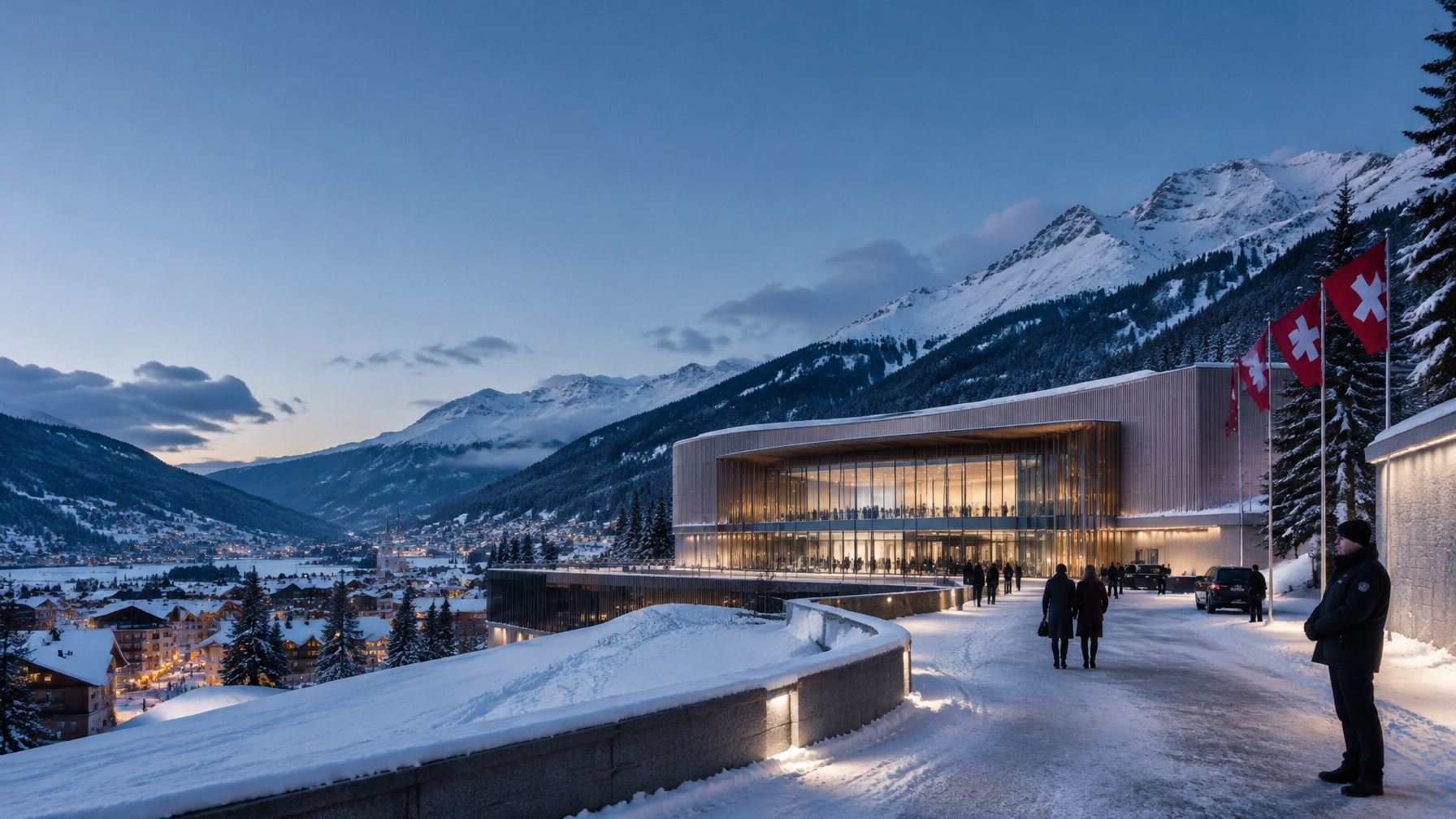
Davos Networking Events: How Deals Get Made in the Alpine Bubble
By The Davos Collective · 14 September 2026 · 8 min read

Davos is often described as a conference. That description is incomplete.
The World Economic Forum Annual Meeting provides the institutional centre of gravity, but the relationships that matter commercially are often developed elsewhere: at private dinners, investor breakfasts, reception rooms, alpine lunches, branded houses and invitation-only gatherings along the Promenade.
During Davos Week 2027, scheduled for 18–22 January, the official Annual Meeting is expected to bring more than 3,000 participants from business, government, international organisations, civil society, academia, media and the arts, according to the Davos official event listing. Around that programme sits a broader and less formal ecosystem of side events.
Understanding that ecosystem is essential for executives, investors and policy professionals seeking more than visibility.
What Davos networking events actually are
Davos networking events are not a single category. They range from open registration-based panels to highly selective dinners where attendance is determined by existing relationships, capital relevance, sector fit or strategic value.
The principal formats include:
- Private investor dinners
- Executive receptions
- Family office lunches
- Founder breakfasts
- Closed-door policy roundtables
- Branded houses on the Promenade
- Sector-specific gatherings
- Alpine hospitality events
- Late-night receptions
- One-to-one meetings arranged around larger programmes
The official Congress Centre is only one part of the week. The surrounding “fringe” ecosystem operates through hotels, restaurants, temporary houses, private residences and dedicated event venues. Some events welcome broad registration. Others are accessible only through an invitation, partner relationship, speaker role or personal introduction.
That distinction matters. A WEF badge may provide access to the official venue, but it does not automatically provide entry to the most relevant private rooms outside it.

Where deals begin
Deals rarely emerge from a single handshake across a crowded reception. Davos compresses several stages of commercial relationship-building into one week.
The first interaction may happen at a panel or cocktail reception. A second conversation may take place over breakfast. A more substantive discussion follows at a private dinner or scheduled hotel meeting. By the end of the week, participants may have established enough context to continue discussions after returning home.
The value lies in proximity and sequencing.
Davos brings together people who are usually separated by geography, hierarchy or access. Investors, founders, corporate development teams, ministers, regulators and advisers may all be present within a short walking distance. This creates an unusual environment in which strategic conversations can move quickly from introduction to evaluation.
The strongest gatherings are designed around this progression. They do not rely on volume. They rely on a carefully selected guest list, a defined theme and enough time for participants to understand one another’s interests.
The main categories of Davos networking events
1. Capital allocator gatherings
Investor dinners and family office events are among the most commercially focused formats during Davos Week.
These gatherings typically include venture capital investors, private equity professionals, family offices, institutional allocators, high-net-worth individuals and corporate investors. The most useful conversations concern capital deployment, co-investment, market entry, strategic partnerships and access to emerging companies.
The Finnish Flow Davos 2027 programme describes its flagship dinner as invitation-only, with approximately 150 selected guests. The organiser reports that 70% of attendees are capital allocators, including venture capital firms, family offices and ultra-high-net-worth individuals.
Those figures are organiser-reported rather than independently verified. They are nevertheless useful indicators of how selective event positioning works: a clear capital thesis, a narrow guest profile and limited capacity create a stronger basis for relevant conversations than a large general reception.
2. Branded houses and thematic platforms
Houses provide a temporary institutional identity during Davos Week. They give companies, countries, sectors and networks a physical base for meetings, panels and receptions.
The Davos Lodge 2027 programme lists panels, masterclasses, keynote sessions, networking events and private meetings under the theme “KAIROS 2027: The Decisive Moment.” The structure illustrates the role of a house: it is not simply a venue, but a programmed environment that filters conversations through a particular theme or network.
Other houses focus on regions, technologies or policy areas. The Africa Collective House, for example, is built around Africa-related business and policy engagement. Technology-focused platforms concentrate on artificial intelligence, digital assets, blockchain, fintech or advanced computing.
For participants, the choice of house should follow the objective. A broad attendance strategy creates activity but not necessarily relevance. The right house places a participant inside a network where the subject matter, geography or capital structure already matches the desired outcome.
3. Executive receptions
Receptions are less structured than dinners and more useful for discovery.
They allow participants to identify who is present, test mutual relevance and determine whether a longer meeting is justified. The most effective reception conversations are brief and specific. They establish a shared issue rather than attempt to explain an entire company, fund or policy agenda.
Receptions are also useful for reactivating relationships. Davos is a recurring annual network, and many participants return with conversations already in progress. The opportunity is often not a first introduction but a high-value reconnection.
4. Policy and cross-sector roundtables
Closed-door roundtables are designed for issues that require candour, context and institutional participation.
They may include policymakers, investors, corporate executives, academics, civil society representatives and advisers. The objective is usually not an immediate transaction. It may be intelligence, alignment, coalition-building, regulatory understanding or early positioning around an emerging issue.
For executives and investors, these gatherings can provide a clearer view of how a theme is being interpreted across governments, industries and capital markets. Their commercial value often appears later, through better timing and more accurate judgement.

How to navigate Davos networking events
Define the outcome before defining the calendar
A crowded calendar is not a strategy.
Before arriving in Davos, participants should define the intended outcome in operational terms:
- Three qualified investor conversations
- Two potential strategic partners
- One government or regulatory discussion
- A clearer view of a market-entry question
- A follow-up meeting with an existing relationship
- Intelligence on a sector or policy shift
This makes event selection more disciplined. A participant seeking capital should prioritise allocator-heavy gatherings. A policy professional may gain more from smaller roundtables than from high-visibility receptions. A corporate executive entering a new market may need a regional house, local adviser and targeted private meetings.
Treat invitations as signals, not outcomes
An invitation confirms access. It does not confirm relevance.
The practical questions are:
- Who is expected to attend?
- What is the format?
- Is the guest list curated by sector, geography or capital profile?
- Are private meetings built into the programme?
- Is the event designed for discussion, visibility or transactions?
- Who has authority to continue the conversation afterwards?
Organiser language should be read carefully. Terms such as “exclusive,” “curated” and “high-level” describe positioning, not necessarily the quality of every interaction. The guest mix, format and follow-up structure are more informative.
Build around anchors
A productive Davos schedule usually has a small number of anchor events, supported by meetings nearby.
The official Annual Meeting, a relevant house, one investor gathering and several pre-arranged meetings may be sufficient. Over-programming creates logistical friction. Snow, security arrangements, room changes and crowded walking routes can make an unrealistic schedule impossible.
Platforms such as iDavos explicitly position themselves around private dinners, receptions, roundtables, branded houses and curated itineraries. Whether using a concierge service or organising independently, the principle remains the same: build a route around objectives rather than collecting invitations.
Prepare a precise opening position
The first conversation should establish three points:
- What the participant is working on
- Why the issue matters now
- Why the other person is relevant to the discussion
A concise opening creates room for the other person to respond. Davos networking events reward clarity more than performance. A long company history or generic description of ambition is rarely useful in a six-minute reception conversation.
Convert contact into a defined next step
The value of a Davos conversation depends on what happens after it.
A follow-up should refer to the specific issue discussed and propose a clear next step: a call with the investment team, an introduction to a policy colleague, a data exchange or a meeting during the following month.
The most effective follow-up is usually sent within several days. It should preserve the context of the conversation rather than rely on a generic message.
What independent intelligence adds
Davos is shaped by formal institutions, private networks, commercial organisers, governments, investors, media organisations and advocacy groups. No single source provides a complete view of the ecosystem.
That is why independent analysis matters.
The Davos Collective provides intelligence on the networks, conversations and decision-makers shaping the Davos ecosystem. It is not affiliated with the World Economic Forum. That separation permits analysis of the official programme and surrounding networks without institutional dependence on the Forum itself.
For executives and investors, independence is practical rather than symbolic. It supports clearer distinctions between:
- Official WEF activity and independent side events
- Public programming and private access
- Visibility and commercial relevance
- Organiser claims and verified information
- Relationship-building and actual deal progression
- Agenda language and measurable market signals

The central lesson
Davos networking events do not replace preparation, judgement or follow-through. They concentrate access.
The strongest outcomes usually come from a disciplined combination of event selection, relevant introductions, short conversations, private meetings and structured follow-up. The physical proximity of Davos creates opportunity, but the quality of the network determines what that opportunity becomes.
The Alpine bubble is not one room. It is a layered system of institutions, houses, dinners, receptions and relationships.
The task is not to attend everything. It is to understand which rooms matter, who shapes them and what follows once the week ends.